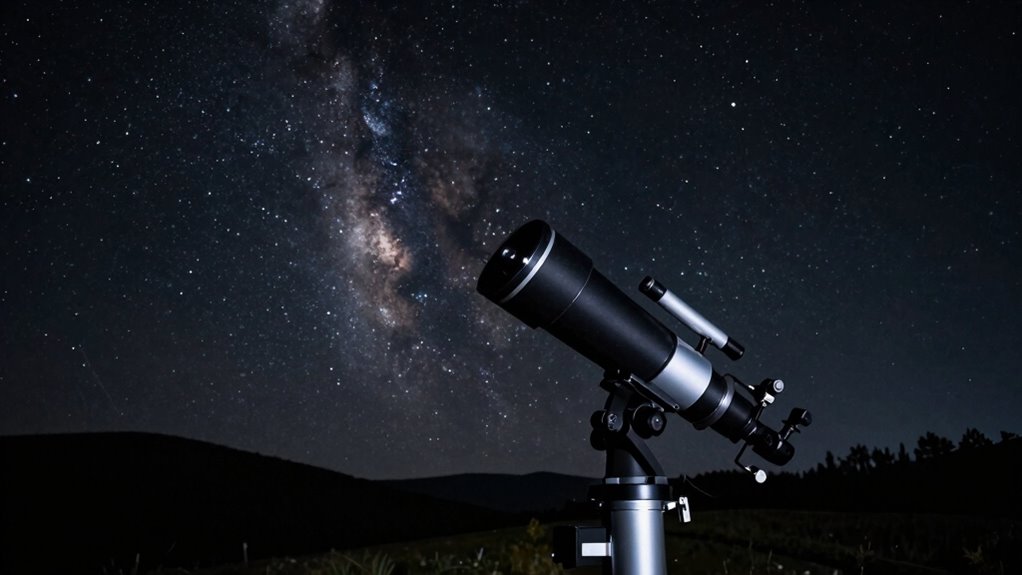

A good telescope certainly enhances your ability to see distant celestial objects, but your observing conditions can make a huge difference in what you experience. When you choose clear, dark skies with stable atmospheric conditions, you’ll see much more detail and clarity. Light pollution and turbulence can limit your view, no matter how advanced your equipment is. Want to discover how to optimize your stargazing environment? Keep exploring to reveal even greater cosmic wonders.

Get beauty and skincare favorites delivered free with Prime
- Fast, free delivery on millions of items
- Prime Video, Amazon Music and more included
- Member-only deals all year
Key Takeaways
- Optimal observation conditions, like dark skies, enhance a telescope’s ability to reveal faint and detailed celestial objects.
- Light pollution reduces visibility and contrast, limiting the deepening of cosmic wonder through even the best telescopes.
- Stable atmospheric conditions improve image clarity, allowing for more profound and awe-inspiring stargazing experiences.
- Choosing the right time and place maximizes telescope performance and reveals more of the universe’s beauty.
- Environment quality is as crucial as equipment, transforming stargazing into a richer, more immersive cosmic journey.
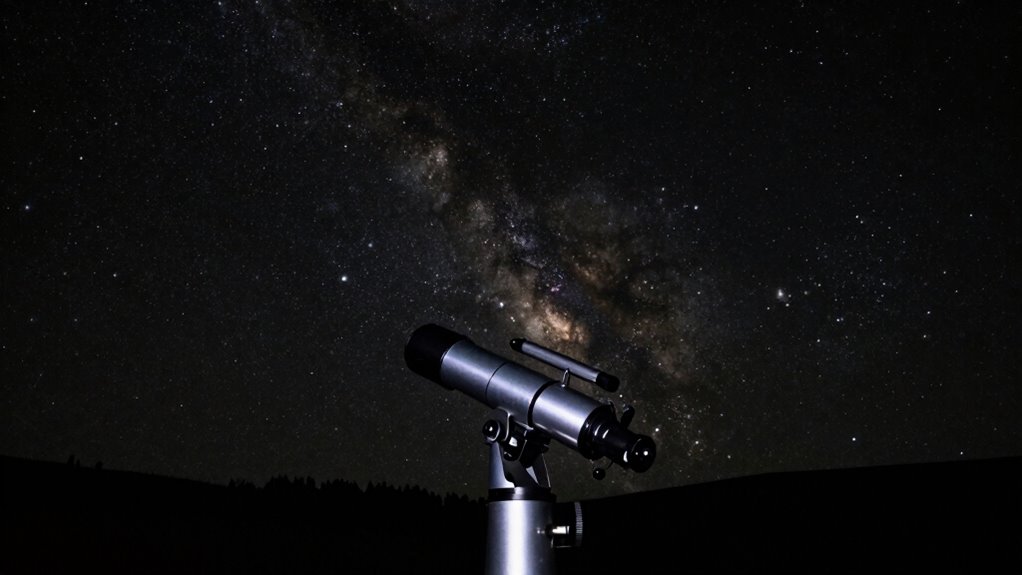
While a good telescope can open your eyes to the universe’s wonders, the conditions under which you observe are just as essential. No matter how advanced your equipment is, light pollution can severely limit what you see. If your viewing area is overwhelmed by artificial lights from cities, street lamps, or even nearby buildings, your telescope’s ability to reveal faint stars, nebulae, or distant galaxies diminishes. Light pollution washes out the night sky, making it harder to distinguish the subtle details in celestial objects. To truly deepen your wonder, you need a dark, clear sky—preferably away from urban glow. That means seeking out rural locations or dedicated dark-sky parks where artificial light is minimal. In these environments, your telescope’s potential is fully realized, letting you peer deeper into the cosmos and observe objects with more clarity and richness. Additionally, understanding atmospheric stability and its impact on your observations can help you optimize your stargazing sessions for the best possible views. The atmosphere acts as a turbulent lens, causing stars to twinkle and images to shimmer, but atmospheric conditions can be unpredictable, so staying informed can improve your chances of a successful observation. When the air is stable, with little to no turbulence, the view through your telescope sharpens considerably. Conversely, on nights with high atmospheric instability, even the best equipment struggles to produce clear images. You might see blurring or flickering, which hampers your ability to study details or enjoy the beauty of celestial bodies. Fortunately, atmospheric stability varies with weather conditions, temperature, and time of night. Typically, late evening or early morning hours offer the most stable conditions. Checking local weather reports or consulting astronomy guides can help you choose the *ideal* time to observe. Being aware of light pollution levels can also assist you in selecting optimal observation sites, ensuring you get the most out of your stargazing experience. Patience and timing are key—waiting for nights with calm, clear air can make a significant difference in the quality of your observations. Remember, the environment‘s impact on visibility can vary significantly based on location and conditions. Proper site selection involves understanding not only light pollution but also natural atmospheric factors that influence clarity. Investing in a high-quality telescope is only part of the equation. Your experience depends heavily on where and when you observe. By minimizing light pollution and choosing nights with stable atmospheric conditions, you’ll maximize your viewing potential. These factors allow your telescope to perform at its best, revealing more detail and depth in the objects you love to explore. When you combine good equipment with *perfect* conditions, the universe truly opens up for you, transforming a simple night of stargazing into a profound journey through the cosmos. Remember, the sky’s wonders are often hidden by the environment, but with a little planning, you can see far beyond the limitations of city life and truly deepen your sense of wonder.
As an affiliate, we earn on qualifying purchases.
Frequently Asked Questions
How Do Weather Patterns Affect Stargazing Quality?
Weather patterns greatly impact your stargazing quality. Cloud cover blocks your view of stars, making it impossible to see clear skies. Atmospheric turbulence, caused by temperature differences and wind, distorts the light from celestial objects, making images blurry. To get the best stargazing experience, choose nights with minimal cloud cover and stable atmospheric conditions. Clear, calm nights offer the sharpest views, allowing you to fully appreciate the wonders of the night sky.
What Are the Best Locations for Astronomical Observation?
You should head to high-altitude, remote locations like Mauna Kea in Hawaii or the Atacama Desert in Chile. These sites offer minimal light pollution and stable atmospheric conditions, ideal for celestial navigation and astronomical photography. Notably, these areas can reduce atmospheric distortion by up to 50%, markedly improving your viewing experience. Choosing such locations allows you to see more stars, planets, and celestial events clearly, deepening your cosmic understanding.
How Does Light Pollution Impact Telescope Use?
Light pollution, especially urban glow, drastically impacts your telescope use by increasing sky brightness. This makes it harder to see faint celestial objects, reducing your view’s clarity and detail. When the sky is too bright, your telescope’s capabilities are limited, and you might miss out on stunning sights. To get the best experience, seek darker locations with minimal sky brightness, away from city lights, for clearer, more awe-inspiring observations.
Can You Improve Telescope Images Without Upgrading Equipment?
Your telescope images can be dramatically improved without new gear by mastering image enhancement techniques and atmospheric stabilization. With patience and skill, you can turn a mediocre view into a breathtaking cosmic masterpiece—truly rivaling the Hubble itself. Using software to sharpen details and stabilize atmospheric distortions helps you see clearer, crisper images. These methods reveal hidden details, making your observations more vivid and awe-inspiring, even under less-than-ideal conditions.
Are There Specific Times of Year Better for Stargazing?
Yes, certain times of year are better for stargazing. During specific seasons, seasonal constellations are more visible, offering spectacular sights. Also, celestial event timings, like meteor showers or planetary alignments, happen at predictable times, making those periods ideal for observing. Clearer weather and longer nights in winter or autumn enhance your experience, so plan your stargazing sessions around these seasonal and celestial event windows for the best results.
light pollution filter for telescope
As an affiliate, we earn on qualifying purchases.
As an affiliate, we earn on qualifying purchases.
Conclusion
So, next time you’re gazing at the stars, remember—having a fancy telescope isn’t enough. Better conditions, like clear skies and minimal light pollution, turn your awe into true wonder. Don’t blame your equipment if you’re missing out; blame the universe’s poor planning. After all, what’s the point of a telescope if the universe refuses to cooperate? Truly, the only thing standing between you and cosmic enlightenment is the weather—and perhaps, your own stubbornness.
atmospheric turbulence reduction telescope accessories
As an affiliate, we earn on qualifying purchases.
As an affiliate, we earn on qualifying purchases.
dark sky night sky observation kit
As an affiliate, we earn on qualifying purchases.
As an affiliate, we earn on qualifying purchases.
Fall Picks
fall essentials
As an affiliate, we earn on qualifying purchases.