Growing edible herbs and greens indoors is easy and rewarding. Start with clean containers, quality soil, and guarantee your plants get plenty of light, either from south-facing windows or grow lights. Use proper harvesting techniques by snipping leaves above a leaf node and avoid taking more than a third at once to keep your plants healthy. Regular watering, pest prevention, and good airflow help maintain vibrant, tasty herbs—continue exploring for more tips on creating a thriving indoor garden.
Key Takeaways
- Use proper harvesting techniques, cutting above leaf nodes and avoiding overharvesting to promote healthy, bushy plants.
- Ensure consistent watering, adequate lighting, and good airflow to maintain healthy indoor herbs and greens.
- Start with clean containers and quality soil, and inspect new plants to prevent pests and diseases.
- Regularly prune and remove affected leaves, and use natural pest control methods like neem oil or insecticidal soap.
- Rotate plants frequently and harvest in the morning to encourage continuous growth and vibrant, flavorful herbs.

Growing your own edible herbs and greens indoors is a practical way to enjoy fresh flavors year-round, even when outdoor gardening isn’t an option. When you cultivate herbs like basil, parsley, or cilantro, or greens such as spinach and lettuce, mastering proper harvesting techniques becomes essential. Instead of waiting until plants are fully mature, harvest leaves regularly to encourage new growth. Use clean, sharp scissors or pruning shears to snip above a leaf set or node, which helps prevent damage and promotes healthy, bushy plants. Always harvest in the morning when the plants are most hydrated and flavorful. Avoid removing more than one-third of the plant at a time to keep it healthy and productive. With consistent harvesting, you ensure a continuous supply of fresh herbs and greens, making your indoor garden both sustainable and rewarding. Proper harvesting techniques also help maintain plant health and optimize flavor, ensuring your herbs stay vibrant and tasty.
Pest management is another critical aspect to keep your indoor herbs and greens thriving. Since your plants are confined indoors, pests like aphids, spider mites, or whiteflies can still pose problems. To prevent infestations, start with clean containers and quality soil, and inspect new plants before introducing them into your growing space. Keep humidity levels balanced and avoid overwatering, which can create a damp environment inviting pests. If you notice pests, act quickly by gently removing pests with a soft brush or using a blast of water to dislodge them. For more stubborn infestations, opt for natural remedies like neem oil or insecticidal soap, ensuring they are safe for edible plants. Regularly inspecting your plants helps catch issues early, preventing widespread problems that can compromise your herbs’ safety and flavor.
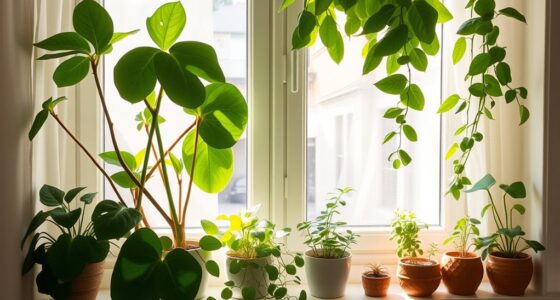
Additionally, maintaining proper airflow and adequate light reduces the chances of pest problems and disease. Position your indoor garden near a south-facing window or use grow lights to ensure your herbs and greens get enough light for healthy growth. Rotating plants and removing any affected leaves supports pest management efforts and keeps your garden vibrant. Remember, healthy plants are less susceptible to pests and diseases, so don’t neglect routine watering, fertilizing, and pruning. With attentive harvesting techniques and vigilant pest management, your indoor garden can flourish, providing you with fresh, delicious herbs and greens all year long. By staying proactive, you’ll enjoy a lush, productive garden that enhances your meals and your overall well-being.
indoor herb garden kit
As an affiliate, we earn on qualifying purchases.
As an affiliate, we earn on qualifying purchases.
Frequently Asked Questions
How Do I Prevent Pests Indoors When Growing Herbs?
To prevent pests indoors and maintain healthy herbs, start with pest prevention by inspecting new plants before bringing them inside. Keep your herbs healthy by providing proper light, water, and airflow, which discourages pests. Regularly check for signs of infestation and remove any affected leaves promptly. Using natural repellents like neem oil can also help. These steps guarantee your indoor plant health stays ideal and pest-free.
What’s the Best Way to Harvest Herbs Without Damaging Plants?
To harvest herbs without damaging plants, use proper pruning techniques by cutting just above a leaf node to encourage healthy growth. Always harvest at the right timing, such as before flowering, for the best flavor. Gently pinch or snip with clean scissors or your fingers, avoiding tearing or over-harvesting. Regular, careful harvesting maintains plant vigor and guarantees a continuous supply of fresh herbs indoors.
Can I Grow Herbs Year-Round Without Natural Sunlight?
It’s entirely possible to grow herbs year-round without natural sunlight, especially since artificial lighting can mimic seasonal variations effectively. When you use grow lights, you control the light cycle, ensuring your herbs get the right amount of light regardless of the season. Coincidentally, this means you don’t have to worry about changing seasons or limited sunlight, making your indoor herb garden a consistent source of fresh herbs all year long.
How Often Should I Water My Indoor Herbs?
You should water your indoor herbs when the soil moisture feels dry to the touch, typically every 2-3 days. Stick to a consistent watering schedule to prevent overwatering or underwatering. Check the soil regularly, and only water when it’s dry. Proper soil moisture is key to healthy herbs, so avoid letting the soil stay soggy or become bone dry. Adjust your watering frequency based on your indoor conditions.
Are There Specific Containers That Work Best for Indoor Herbs?
You should choose container types with good drainage considerations, like ceramic, plastic, or terracotta pots, to prevent waterlogging. Make certain they have drainage holes to allow excess water to escape, which keeps your indoor herbs healthy. Avoid containers without drainage, as standing water can cause root rot. Select a size that fits your herb’s root system, and use saucers to catch excess water without damaging your indoor space.
grow lights for herbs
As an affiliate, we earn on qualifying purchases.
As an affiliate, we earn on qualifying purchases.
Conclusion
Growing your own herbs and greens indoors is a rewarding journey that keeps your kitchen fresh and lively. With a little effort and the right setup, you’ll find it’s easier than you think to nurture your plants and enjoy their bounty year-round. Remember, patience is a virtue—things don’t happen overnight. Stick with it, and you’ll see your indoor garden flourish, proving that where there’s a will, there’s a way to bring fresh flavors right to your doorstep.
herb pruning scissors
As an affiliate, we earn on qualifying purchases.
As an affiliate, we earn on qualifying purchases.
natural pest control for herbs
As an affiliate, we earn on qualifying purchases.
As an affiliate, we earn on qualifying purchases.