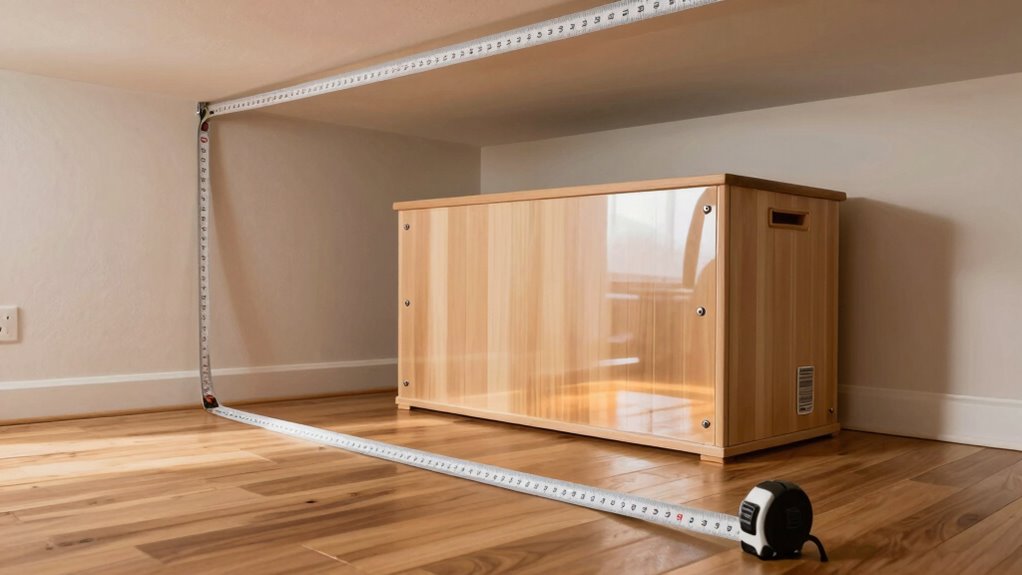

Before buying a home sauna, you need to carefully measure the entire space, including length, width, and height, and consider surrounding areas for access and maintenance. Check if your floor can support the weight, especially when filled with water, and verify ceiling clearance for installation. Make certain there’s adequate ventilation and access to electrical outlets for safe operation. Paying attention to these often overlooked spaces now will help you avoid surprises later—keep exploring to learn more.
Key Takeaways
- Verify the ceiling height and clearance for comfortable sauna installation and future access.
- Assess the flooring’s weight capacity to support the sauna when filled with water and in use.
- Ensure sufficient space around the sauna for easy access, maintenance, and safe operation.
- Confirm adequate ventilation routes to prevent humidity buildup and ensure air circulation.
- Check proximity to electrical outlets and ensure the space can handle the sauna’s power requirements.
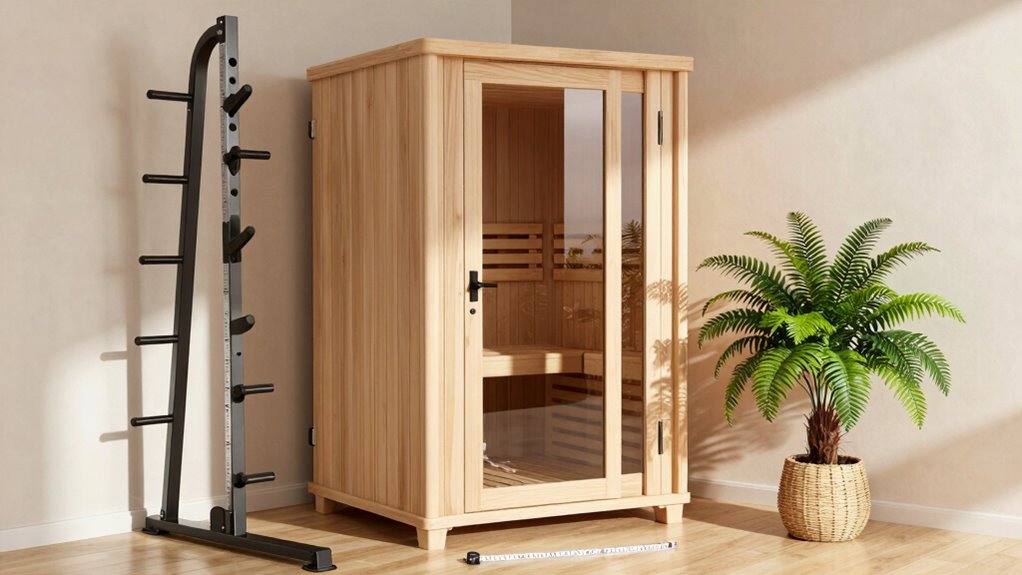
Before you buy a home sauna, measure these overlooked spaces first. The first thing to consider is the installation space. You might have a vague idea of where you want it, but precise measurements are essential. Measure the length, width, and height of the area you’re considering. Don’t forget to account for space around the sauna for easy access, maintenance, and safe operation. If you’re planning to install a larger model, verify your room can accommodate it comfortably without feeling cramped. Also, check if the flooring can support the weight, especially when the sauna is filled with water or people. If you’re placing the sauna in a basement, attic, or garage, confirm that the floor is sturdy enough and that the ceiling height is sufficient for the sauna’s height plus some extra clearance. Remember, a cramped space can affect your sauna experience and complicate installation or future maintenance. Additionally, consider the structural integrity of your space, as it’s crucial for supporting the weight of the sauna and ensuring safety.
Next, focus on ventilation requirements. Proper ventilation isn’t just about comfort; it’s vital for safety and longevity of your sauna. Many people overlook how indispensable good airflow is, especially in enclosed spaces. You need to determine if your chosen location allows for adequate ventilation routes. This might mean installing vents or ensuring windows can be opened nearby. Without proper ventilation, humidity and heat can build up excessively, leading to structural damage or mold growth, which can compromise your health and the sauna’s durability. Check the sauna’s manufacturer guidelines for recommended ventilation setups—some models require dedicated vent holes or exhaust fans. If you’re installing the sauna indoors, think about how you’ll ventilate the room to prevent heat buildup and ensure fresh air circulation. Also, consider if the space has access to power outlets and if the electrical setup can handle the sauna’s requirements. Failing to plan for ventilation can turn your relaxing retreat into an uncomfortable or even unsafe environment.
home sauna installation space measurement tools
As an affiliate, we earn on qualifying purchases.
As an affiliate, we earn on qualifying purchases.
Frequently Asked Questions
Can I Install a Sauna Outdoors or in a Covered Patio?
Yes, you can install a sauna outdoors or in a covered patio. Outdoor placement is popular, but make certain to select a sauna designed for exterior use with weatherproof materials. If you choose a covered patio, guarantee there’s proper ventilation and enough space for safe installation. Both options work well, just consider insulation and protection from the elements to keep your sauna in top condition and enjoy a relaxing experience year-round.
What Are the Ventilation Requirements for a Home Sauna?
Your home sauna’s ventilation is vital—it’s the heartbeat that keeps it safe and comfortable. You need a dedicated ventilation fan for proper air exchange, which prevents humidity buildup and guarantees fresh air flows in and out efficiently. Aim for at least one air exchange every 15-30 minutes, depending on size. Proper ventilation not only prolongs your sauna’s lifespan but also assures a relaxing, healthy experience every time you step inside.
How Do Ceiling Height and Insulation Affect Sauna Performance?
Ceiling height and insulation greatly impact your sauna’s performance. Higher ceilings allow better sauna air circulation, preventing overheating and ensuring even heat distribution. Adequate ceiling insulation keeps heat trapped inside, boosting efficiency and reducing energy costs. When measuring your space, consider these factors, as they influence how comfortably and effectively your sauna operates. Proper ceiling insulation and ideal ceiling height create a more enjoyable, consistent sauna experience.
Are There Specific Electrical Codes for Home Sauna Installation?
Yes, there are specific electrical codes you must follow for home sauna installation. You need to guarantee electrical safety by adhering to wiring standards set by local codes, which often require dedicated circuits, proper grounding, and GFCI outlets to prevent shocks. Always hire a licensed electrician familiar with sauna installations to ensure your setup meets all safety requirements and passes inspections, protecting you and your family.
What Is the Recommended Clearance Space Around the Sauna?
Imagine the perfect retreat—your sauna. To achieve that, keep a clear path, leaving at least 24 inches of sauna door clearance for easy entry and exit. Make certain there is sufficient space around the unit for ventilation and safety. Consider interior lighting options that don’t overcrowd the area. Proper clearance prevents overheating, simplifies maintenance, and guarantees a comfortable experience, transforming your sauna into a peaceful haven rather than a cramped space.
As an affiliate, we earn on qualifying purchases.
Conclusion
Before you bring a home sauna into your space, remember it’s not just about size—it’s about making certain it fits comfortably like a puzzle piece in your home’s layout. Measure those overlooked spaces now to avoid surprises later. Think of your home as a garden; if the plot isn’t prepared, even the best seeds won’t thrive. Proper planning ensures your sauna becomes a relaxing oasis, not an awkward obstacle. Happy planning!
As an affiliate, we earn on qualifying purchases.
outdoor sauna electrical outlet extension
As an affiliate, we earn on qualifying purchases.
As an affiliate, we earn on qualifying purchases.