If you start music journaling, you’ll deepen your emotional self-awareness and discover new creative insights. By reflecting on how songs, lyrics, and melodies make you feel, you create a meaningful connection with your emotions. This habit helps you process complex feelings, track your evolving tastes, and inspire your artistic projects. Regular journaling can become a powerful tool for self-discovery and growth, offering many benefits along the way. Keep exploring, and you’ll find practical tips to get started.

Get beauty and skincare favorites delivered free with Prime
- Fast, free delivery on millions of items
- Prime Video, Amazon Music and more included
- Member-only deals all year
Key Takeaways
- Music journaling fosters emotional self-awareness by encouraging reflection on personal feelings through songs and lyrics.
- It stimulates creative inspiration, helping artists translate emotional reactions into new ideas and projects.
- Regular journaling provides a safe space for processing complex emotions and tracking personal growth.
- The practice enhances understanding of evolving musical tastes and emotional shifts over time.
- It is an accessible habit that deepens emotional connection and artistic development with minimal tools required.
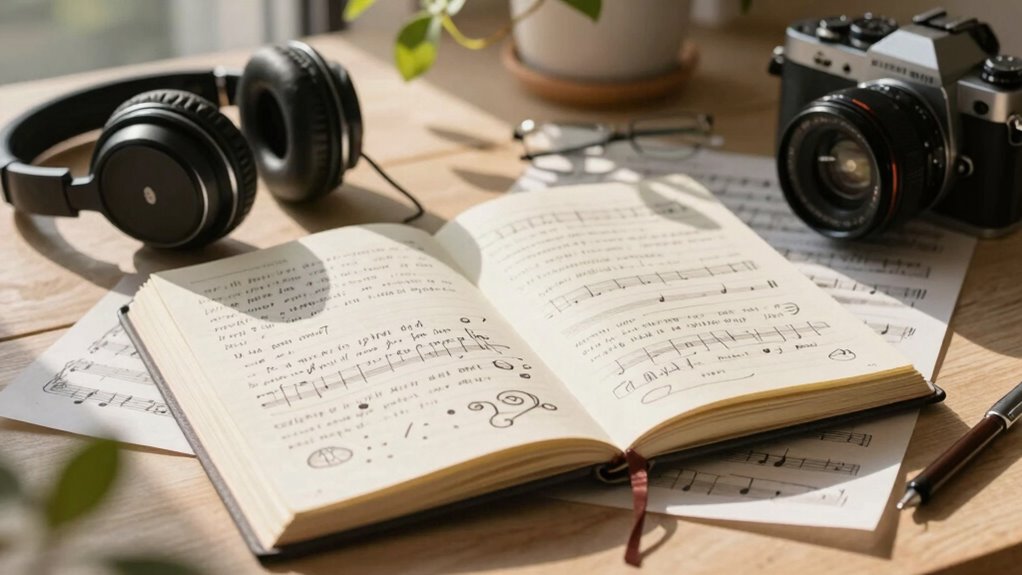
Music journaling is a powerful way to deepen your connection with the music you love and gain insights into your own emotional landscape. When you sit down to write about a song, an album, or even a particular lyric, you’re creating a space for emotional expression. Instead of just passively listening, you actively engage with the music on a personal level. This process encourages you to explore how certain melodies or lyrics resonate with your feelings, helping you understand yourself better. As you write, you might discover new aspects of your emotional state—joy, sadness, nostalgia—that you hadn’t fully acknowledged before. Over time, this practice becomes a mirror, revealing patterns in your emotional responses to different musical styles and themes. Incorporating self-reflection into your music journaling can deepen your insights and foster personal growth.
Music journaling deepens emotional self-awareness through personal reflection on songs and lyrics.
Beyond emotional expression, music journaling sparks creative inspiration. When you put your thoughts into words, you open the door to new ideas and perspectives. It’s not just about recording your feelings; it’s about translating your emotional reactions into written reflections that can lead to further artistic exploration. Perhaps a particular song evokes a vivid memory or sparks a new storyline for a poem or a piece of music you’re working on. Journaling helps you connect the dots between your emotional experiences and your creative projects, fueling your inspiration. You might find that certain lyrics or melodies suggest new melodies, themes, or lyrics for your own compositions. This process transforms your listening experience into a dynamic dialogue that fuels your creative growth. Additionally, music as an art form can serve as a source of ongoing inspiration and emotional comfort, enriching your journaling practice.
Additionally, music journaling offers a dedicated space for self-reflection. When you regularly document your reactions to music, you develop a clearer understanding of your evolving tastes and emotional shifts. It becomes an ongoing dialogue with yourself, where you can track how your relationship with music changes over time. This habit can also be a form of emotional release, providing a safe outlet for processing complex feelings. As you revisit old entries, you’ll notice how your perspectives deepen and shift, giving you a sense of progress and self-awareness. To maximize the benefits, setting aside a regular time for journaling can help establish this meaningful habit.
Incorporating music journaling into your routine isn’t complicated. All you need is a notebook or digital document, and a moment of quiet to reflect. Whether you write about what a song means to you, how it makes you feel, or how it inspires your own creativity, you’re actively engaging with your emotional and artistic self. More people should try this habit—not only to enrich their musical experience but also to foster emotional clarity and creative growth. It’s a simple practice with the potential to transform how you connect with music and with yourself.
As an affiliate, we earn on qualifying purchases.
Frequently Asked Questions
Can Music Journaling Improve My Musical Skills?
Yes, music journaling can improve your musical skills by encouraging emotional expression and creative exploration. As you jot down thoughts, ideas, or feelings about music, you deepen your understanding and connection to your craft. This active engagement helps you identify areas for growth, develop your unique style, and foster inspiration. Over time, this practice boosts your technical skills and makes your musical journey more meaningful and expressive.
What Types of Music Are Best for Journaling?
You should try journaling with calming genres like classical or acoustic music, which boost mood enhancement and help you focus. Alternatively, energetic genres like pop or rock can inspire creativity and motivate reflection. The best music for journaling depends on your mood and goals—so experiment with different music genres to discover what enhances your reflection process and makes your journaling sessions more meaningful.
How Often Should I Journal to See Benefits?
Think of journaling as tending a garden—consistency helps your emotional insight flourish. To see benefits, aim to journal at least 3-4 times a week. This steady practice allows your thoughts and feelings to grow clearer, much like plants thriving with regular care. Staying consistent enhances your emotional awareness, turning journaling into a nourishing habit that deepens self-understanding and personal growth over time.
Is Music Journaling Suitable for All Age Groups?
Music journaling is suitable for all age groups because it fosters emotional expression and promotes intergenerational connection. Younger people can explore their feelings and creativity, while older individuals can reflect on memories or emotions. It’s a versatile activity that encourages connection across ages, helping everyone understand each other better through shared musical experiences. Whether you’re young or old, music journaling offers meaningful ways to express yourself and connect with others.
What Tools or Materials Do I Need to Start?
To start music journaling, you’ll need basic tools like a notebook or digital app, paper, and a pencil or pen. Incorporate music notation if you want to write out melodies or ideas. Use creative prompts to inspire your entries—these can be questions, themes, or emotions. Don’t worry about perfection; focus on expressing yourself and experimenting with different musical concepts. This simple setup keeps your journaling accessible and enjoyable.
As an affiliate, we earn on qualifying purchases.
Conclusion
Are you willing to give music journaling a try? By embracing this reflection habit, you can deepen your connection to your emotions, gain insight into your daily experiences, and nurture your creativity. It’s a simple yet powerful tool that fits easily into any routine. So, why not start today? Isn’t it time you let music become your personal mirror, revealing truths you might never have discovered otherwise? Your reflective journey awaits.
creative writing journal for musicians
As an affiliate, we earn on qualifying purchases.
As an affiliate, we earn on qualifying purchases.
emotional self-awareness journal
As an affiliate, we earn on qualifying purchases.
As an affiliate, we earn on qualifying purchases.
Columbus Day / Indigenous Peoples' Day Picks
long weekend sales
As an affiliate, we earn on qualifying purchases.