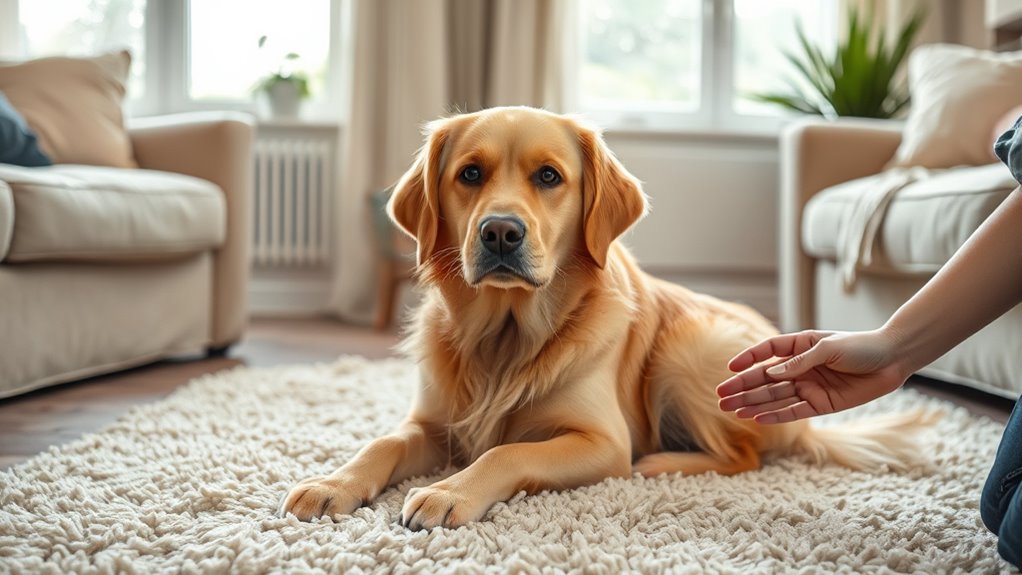

To understand and manage your pet’s anxiety, identify specific triggers like loud noises, visitors, or being alone. Use gradual desensitization combined with positive reinforcement to help your pet build confidence. Create a calming environment with cozy spaces, enriching toys, and calming scents. Maintaining a consistent routine and staying patient are key, as behavior change takes time. If you explore further, you’ll discover effective strategies to help your pet feel more relaxed and secure.
Key Takeaways
- Identify specific stress triggers and gradually expose your pet to them using desensitization techniques.
- Reinforce calm behavior with positive rewards like treats, praise, and affection.
- Create a comforting environment with toys, cozy spaces, calming scents, and soothing sounds.
- Maintain a consistent daily routine to provide reassurance and reduce anxiety.
- Combine behavior modification with environmental enrichment for a comprehensive approach to managing pet anxiety.

Pet anxiety can profoundly affect your furry friend’s well-being, but with the right understanding and strategies, you can help ease their stress. One of the most effective approaches involves behavior modification, which focuses on changing your pet’s responses to triggers that cause anxiety. This process often starts with identifying specific situations that upset them, such as loud noises, unfamiliar visitors, or being left alone. Once you pinpoint these triggers, you can implement gradual desensitization techniques, exposing your pet to the stimuli in controlled, manageable doses. Over time, this helps them build resilience and reduces their fearful reactions. Consistency is key here, so stick to a routine and use positive reinforcement to reward calm behavior. Offering treats, praise, or affection when they stay relaxed encourages them to associate the stressful situation with positive outcomes.
Alongside behavior modification, environmental enrichment plays a crucial role in calming an anxious pet. Creating a stimulating and comforting environment helps divert their focus from stressors and reduces feelings of loneliness or confinement. You can provide toys that challenge their mind, such as puzzle feeders or interactive games, to keep them engaged and distracted from anxiety triggers. Comfortable bedding, cozy hideouts, and familiar objects also serve as safe havens where your pet can retreat and feel secure. Incorporating calming scents, like lavender or chamomile, can further promote relaxation, especially when combined with gentle music or white noise. These environmental adjustments not only ease anxiety but also improve overall well-being, helping your pet feel more comfortable and confident in their surroundings. Additionally, selecting specialized planters designed for environmental enrichment can make a subtle but meaningful difference in their daily routine.
It’s important to remember that managing pet anxiety isn’t a quick fix; it requires patience and consistency. Behavior modification might take weeks or even months to show significant progress, but persistent effort will pay off. Keep a calm demeanor yourself, as your energy influences your pet’s emotional state. Avoid punishing or scolding during anxious episodes, since that can worsen their fears. Instead, focus on creating a positive, predictable routine that provides structure and reassurance. Incorporating environmental enrichment into daily life enriches their environment and offers ongoing mental stimulation, which can reduce anxiety over time. With these combined strategies—behavior modification and environmental enrichment—you actively help your pet develop healthier responses to stressors, fostering a more relaxed and happier life for your furry friend.
Top picks for "understand anxiety manage"
Open Amazon search results for this keyword.
As an affiliate, we earn on qualifying purchases.
Frequently Asked Questions
Can Pet Anxiety Be Completely Cured?
Pet anxiety can’t always be completely cured, but you can manage it effectively. Through consistent behavior modification, you help your pet build confidence and reduce stress. Natural remedies like calming supplements or pheromone diffusers may also support relaxation. While some pets improve markedly, others may need ongoing care. Stay patient, and work closely with your veterinarian to develop a tailored plan that helps your pet feel safe and secure.
Are There Specific Breeds More Prone to Anxiety?
Some breeds are more prone to anxiety due to breed predispositions and inherent anxiety tendencies. For example, smaller, sensitive breeds like Chihuahuas or Shih Tzus often experience higher anxiety levels, while more confident breeds like Labrador Retrievers tend to be calmer. Knowing your pet’s breed traits helps you anticipate anxiety issues and tailor your approach, providing comfort and reducing stress in their daily lives.
How Do I Identify Anxiety in a New Pet?
You can identify anxiety in your new pet by observing their body language, such as trembling, panting, or tucked tail, which signals distress. Notice how they react to environmental triggers like loud noises, unfamiliar people, or new surroundings. If they seem overly clingy, avoid eye contact, or hide frequently, these are signs of anxiety. Paying attention to these cues helps you understand your pet’s emotional state and address their needs effectively.
What Are the Signs of Severe Pet Anxiety?
When it comes to severe pet anxiety, you’ll notice behavior patterns like constant pacing, trembling, or excessive vocalization that just won’t quit. Environmental triggers, such as loud noises or unfamiliar settings, can make it worse. Your pet might also hide, refuse to eat, or show signs of aggression. If these signs persist, it’s a clear sign that their anxiety runs deep, and you should seek professional help to get them relief.
Is Medication Necessary for Managing Pet Anxiety?
Medication isn’t always necessary for managing pet anxiety; often, behavior modification techniques and natural remedies suffice. You can start by implementing calming routines, providing a safe space, and using pheromone diffusers. Natural remedies like CBD or herbal supplements may also help, but consult your vet before using medication. Combining these approaches can effectively reduce your pet’s anxiety, making them feel more secure without relying solely on drugs.
Conclusion
So, after all this talk about calming your pet, it’s funny how we often forget that they can’t just “snap out of it” like we do. You’ve learned the signs, tried the tips, but sometimes, the best cure is patience—and maybe a little bit of humor. Because in the end, the irony is, as much as we want to fix their anxiety, it’s actually us who need to stay calm the most.