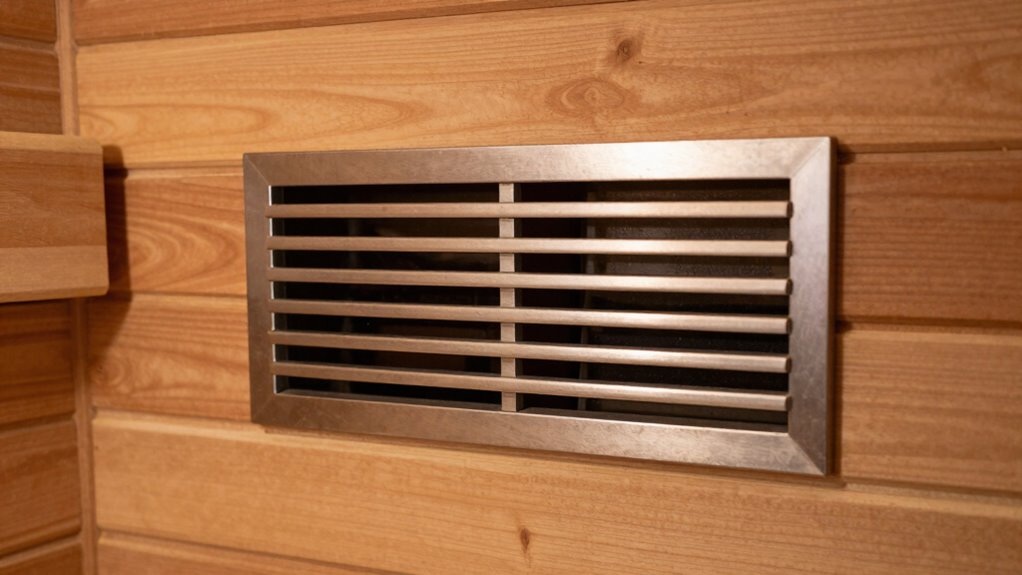

Before you buy a sauna, understand that proper ventilation guarantees safety, comfort, and durability. You need intake vents near the floor for fresh air and exhaust vents close to the ceiling to release hot, stale air. Good airflow controls humidity, prevents mold, and maintains air quality, while adjustable vents let you customize the environment. Proper design enhances energy efficiency and extends your sauna’s lifespan. Keep exploring to learn more about creating the ideal sauna ventilation system.
Key Takeaways
- Ensure the ventilation system allows easy control of airflow, with intake vents near the floor and exhaust vents near the ceiling.
- Proper placement and adjustable vents improve air quality, prevent moisture buildup, and promote even heat distribution.
- Consider the size and layout of your sauna to determine appropriate ventilation capacity and design.
- Look for systems with humidity control features, like sensors or dehumidifiers, to maintain comfortable moisture levels.
- Good ventilation design extends sauna lifespan, enhances safety, and ensures a pleasurable, healthy sauna experience.
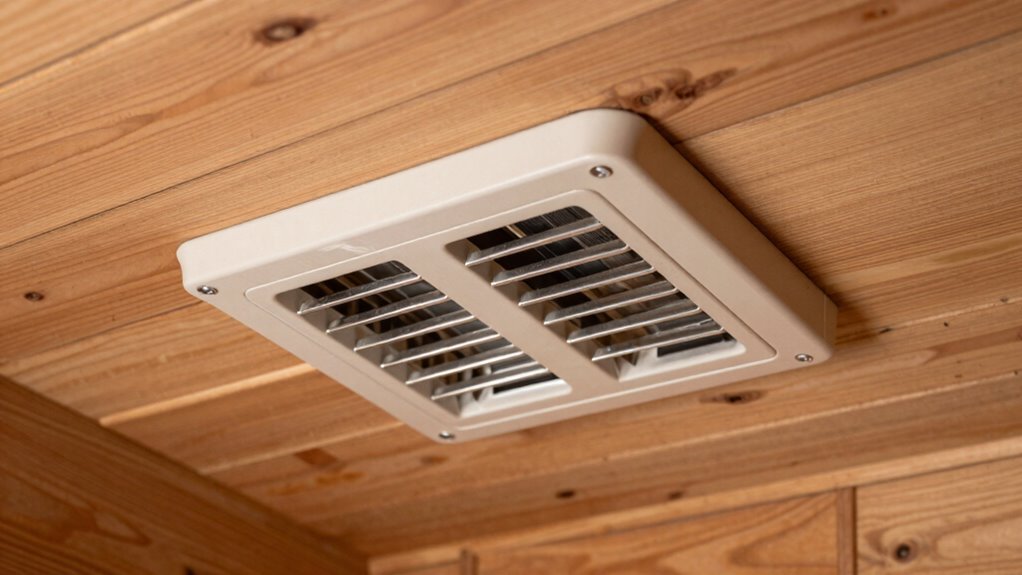
Proper ventilation is vital for a safe and enjoyable sauna experience. When you’re considering purchasing a sauna, understanding how ventilation works can make a significant difference in your overall comfort and safety. Good ventilation ensures effective airflow management, which is indispensable for maintaining consistent temperature and air quality. It also helps with humidity control, preventing the space from becoming too damp or too dry, both of which can impact your health and the longevity of the sauna itself.
Airflow management is at the core of effective sauna ventilation. You want to ensure there are proper intake and exhaust vents positioned correctly. Typically, the intake vent should be located near the floor, allowing fresh air to enter the space, while the exhaust vent should be positioned near the ceiling to allow hot, stale air to escape. This setup encourages a natural convection current, promoting continuous air exchange. When considering a sauna, check if it has adjustable vents, so you can fine-tune airflow based on your preferences or seasonal changes. Proper airflow prevents stuffiness and helps distribute heat evenly throughout the space, making the experience more comfortable and efficient. Additionally, airflow management is essential for maintaining optimal air quality and preventing the build-up of pollutants or odors within the sauna environment. Ensuring good ventilation design can also enhance the energy efficiency of your sauna, reducing long-term operational costs. Adequate ventilation is also crucial for controlling humidity levels, which directly affects comfort and the durability of the sauna materials. Properly designed ventilation systems can also help mitigate the effects of temperature fluctuations, ensuring a consistent environment.
Humidity control is equally important because it influences your comfort and the sauna’s durability. Excessive humidity can make the environment feel damp and uncomfortable, possibly leading to mold or wood deterioration over time. Conversely, too little humidity can cause discomfort and dry skin. When shopping for a sauna, look for features that facilitate humidity management, such as adjustable vents or built-in dehumidification systems. Some saunas incorporate humidity sensors that automatically regulate moisture levels, which can be a worthwhile investment if you want a consistent experience. Good humidity control also promotes better air quality, reducing the likelihood of mold growth and unpleasant odors.
Before you buy, consider how the sauna’s ventilation system integrates with your space. A well-designed system should allow you to easily control airflow and humidity levels to suit your preferences. Think about the size and layout of your room, as these factors influence ventilation needs. Remember, no matter how high-quality the heater or insulation, poor ventilation can lead to an uncomfortable or unsafe environment. Properly managed airflow and humidity not only improve comfort but also extend the lifespan of your sauna by preventing moisture-related damage. Taking the time to understand these aspects will help you choose a sauna that offers a safe, pleasurable, and healthy experience every time you use it.
As an affiliate, we earn on qualifying purchases.
Frequently Asked Questions
How Often Should Sauna Ventilation Systems Be Cleaned?
You should clean your sauna ventilation system at least once every three to six months. Regular cleaning helps maintain good air quality and guarantees moisture control, preventing mold and mildew buildup. If you use your sauna frequently, consider cleaning more often. Keep an eye out for dust, debris, or any strange odors, and promptly address them. Proper maintenance prolongs your ventilation system’s lifespan and keeps your sauna a safe, healthy environment.
Can Poor Ventilation Cause Mold in the Sauna?
Think of poor ventilation as a dam that lets moisture buildup flow unchecked, creating a perfect storm for mold. Without proper airflow, humidity lingers, encouraging mold growth and bad odors. This not only affects odor control but also damages your sauna’s structure. So, make certain your ventilation system is effective, clearing out excess moisture and preventing mold, keeping your sauna fresh, safe, and enjoyable for every session.
What Is the Average Cost of Sauna Ventilation Installation?
The average cost of sauna ventilation installation ranges from $300 to $1,200, depending on ventilation types and complexity. You should consider proper installation tips, like ensuring adequate airflow and sealing, to optimize performance. Ventilation types include exhaust fans, intake vents, or a combination. To save costs, compare professional services and DIY options, and always prioritize quality to prevent issues like mold and maintain a safe, enjoyable sauna environment.
Are There Eco-Friendly Ventilation Options Available?
Yes, there are eco-friendly options available for sauna ventilation. You can opt for sustainable designs that prioritize energy efficiency and environmentally conscious materials. Look for systems that utilize eco-friendly components, such as low-energy fans or renewable materials, which reduce your carbon footprint. These options help you create a greener, cleaner sauna experience without sacrificing performance, ensuring your wellness and the planet’s well-being go hand in hand.
How Does Ventilation Impact Sauna Energy Efficiency?
Proper ventilation boosts your sauna’s energy efficiency by improving air circulation and humidity control. When you guarantee good airflow, your sauna heats evenly, reducing energy waste and maintaining consistent temperatures. Effective ventilation also helps regulate humidity, preventing excess moisture that can cause heat loss. By investing in good ventilation, you’ll enjoy a more comfortable, energy-efficient sauna experience, saving you money while keeping your sauna in ideal condition.
As an affiliate, we earn on qualifying purchases.
Conclusion
Now that you’re armed with these sauna ventilation secrets, you’re practically a sauna whisperer! Imagine turning your space into a breath-of-fresh-air paradise—where every inhale feels like a mountain breeze. Get it just right, and you’ll transform your sauna into a legendary sanctuary, so perfectly ventilated that even the most stubborn heat will bow to your expertise. Your sauna dreams are now unstoppable—go ahead, make it the coolest, freshest retreat on the planet!
As an affiliate, we earn on qualifying purchases.
As an affiliate, we earn on qualifying purchases.