
Workplace noise pollution can cause irreversible hearing damage if you’re exposed to high decibel levels over time. To protect your hearing, always use proper PPE like earplugs or earmuffs, ensuring they fit well and are worn correctly. Employers should also implement sound control measures, but your best defense is consistent protection and regular hearing tests. Staying informed about noise hazards helps prevent long-term damage; stay with us to learn more about safeguarding your hearing effectively.

Get beauty and skincare favorites delivered free with Prime
- Fast, free delivery on millions of items
- Prime Video, Amazon Music and more included
- Member-only deals all year
Key Takeaways
- Implement engineering controls like sound barriers to reduce noise exposure at the source.
- Use appropriate PPE, such as earplugs or earmuffs, fitted correctly for maximum noise attenuation.
- Conduct regular hearing assessments to detect early signs of noise-induced hearing loss.
- Enforce workplace policies requiring PPE use whenever noise levels exceed safe limits.
- Educate employees on risks of noise pollution and proper protective measures to prevent irreversible hearing damage.

Exposure to loud noise in the workplace can cause serious and often irreversible hearing damage if proper precautions aren’t taken. Protecting your auditory health should be a top priority, especially if you work in an environment where noise levels exceed safe limits. Prolonged exposure to high decibels can lead to permanent hearing loss, tinnitus, and other auditory issues that diminish quality of life. Fortunately, there are effective measures you can implement to safeguard your hearing. One of the most essential is consistently using personal protective equipment (PPE) designed specifically for noise reduction. Earplugs and earmuffs are the most common types of PPE used to block or dampen excessive noise, helping prevent damage before it occurs.
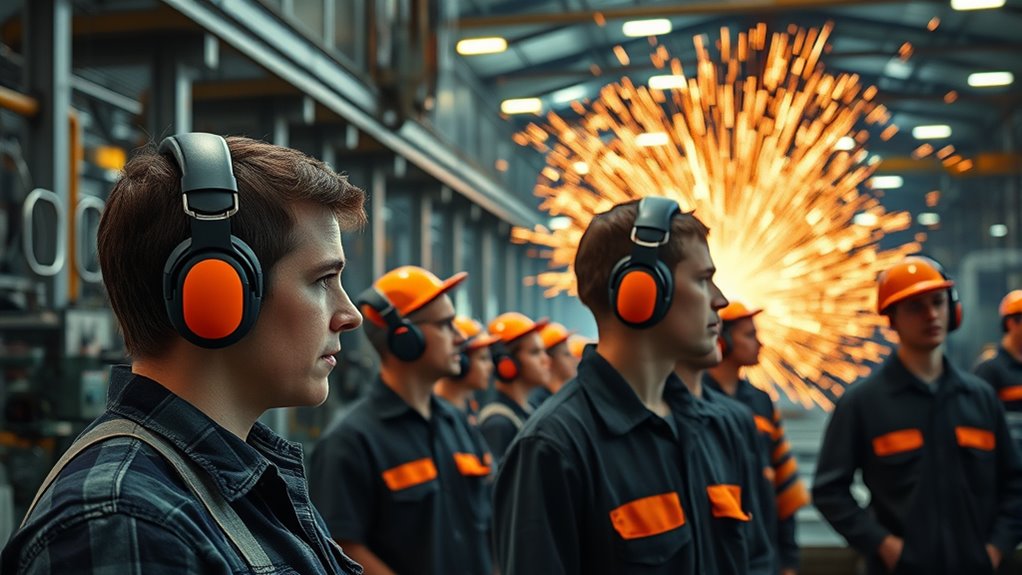
Protect your hearing with PPE to prevent irreversible damage from workplace noise.
When it comes to auditory health, the key is to minimize your exposure to harmful sound levels. Noise-induced hearing loss is gradual and often goes unnoticed until significant damage has been done. That’s why wearing PPE isn’t just a recommendation; it’s a necessity. Properly fitted ear protection ensures maximum sound attenuation. If your workplace provides PPE, always wear it correctly, ensuring a snug fit that seals out noise effectively. If you’re responsible for selecting PPE, choose products rated for the decibel levels you encounter regularly. Remember, not all ear protection offers the same level of noise reduction, so understanding the noise environment is vital for making the right choice.
Additionally, it’s important to be aware of workplace policies and safety protocols related to noise exposure. Employers are required to implement engineering controls, such as sound barriers or equipment modifications, to reduce noise at the source. Still, personal protective measures serve as the last line of defense. If you notice that noise levels are loud enough to require PPE, don’t ignore the warning signs or dismiss the discomfort. Your auditory health depends on proactive steps. Consistent use of PPE not only helps prevent hearing loss but also preserves your ability to communicate effectively and enjoy everyday sounds.
Another important consideration is understanding the cost factors involved in effective hearing protection, including the availability of different types of PPE and workplace safety investments. Finally, take regular hearing assessments if your job involves consistent noise exposure. Early detection of any hearing issues allows you to take appropriate action before irreversible damage occurs. Remember, safeguarding your hearing isn’t just about following rules—it’s about protecting your well-being for the long term. Prioritize your auditory health by using the right PPE, adhering to safety guidelines, and staying vigilant about noise levels in your workplace. Your hearing is invaluable, and taking these steps now can save you from serious health consequences later.
As an affiliate, we earn on qualifying purchases.
Frequently Asked Questions
How Do Noise Levels Vary Across Different Industries?
You’ll notice that industry-specific noise varies greatly, with manufacturing and construction environments experiencing high noise levels, often exceeding safe limits. In contrast, offices tend to have lower noise level variability, making hearing protection less critical. As you move across industries, expect significant fluctuations in noise exposure, so always assess the specific noise risks involved. This awareness helps you implement proper hearing protection measures tailored to each industry’s noise level variability.
What Are the Long-Term Health Effects of Noise Exposure?
Ignoring noise exposure can turn your life into a constant symphony of ringing and muffled sounds. Long-term effects include irreversible hearing loss and persistent tinnitus, making even quiet moments unbearable. Without proper hearing protection, you risk losing your ability to enjoy conversations or music. Tinnitus management becomes a daily battle, and once damaged, your hearing health may never fully recover. Protect your ears now to avoid these lifelong consequences.
Are There Specific Laws Regulating Workplace Noise Levels?
Yes, there are specific laws regulating workplace noise levels. You must follow regulatory standards set by agencies like OSHA, which specify permissible exposure limits. To guarantee compliance, you should implement measures such as regular noise assessments and providing proper hearing protection. Staying within these limits helps protect your hearing health and avoids penalties. Make sure your workplace adheres to these regulations to maintain a safe environment for everyone involved.
How Effective Are Different Types of Hearing Protection Devices?
You’ll find that earplug efficacy varies, with foam earplugs offering good noise reduction if inserted properly, while custom-molded ones provide better comfort and fit. Earmuff comfort depends on padding and adjustable headbands, making them more suitable for long-term wear. Combining earplugs and earmuffs enhances protection, especially in very noisy environments. Overall, choosing the right device depends on your comfort preferences and the level of noise you need to block.
Can Noise Pollution Affect Mental Health in the Workplace?
Have you considered how noise pollution might impact your mental health? It can cause noise-induced stress and auditory fatigue, which lead to increased anxiety, irritability, and difficulty concentrating. These effects can accumulate over time, making you feel overwhelmed or exhausted. Isn’t it worth protecting your well-being by managing noise levels? Taking steps like using hearing protection helps reduce these risks and supports better mental health in the workplace.
As an affiliate, we earn on qualifying purchases.
Conclusion
Don’t wait until hearing damage happens—protect your ears now. Some might think noise levels are harmless or that hearing loss is just part of aging, but that’s false. By using proper hearing protection and staying aware of noise levels, you can prevent long-term damage and enjoy a safer workplace. Take action today; your hearing health is too valuable to risk. Protect your ears now, before it’s too late.
As an affiliate, we earn on qualifying purchases.
As an affiliate, we earn on qualifying purchases.
Fall Picks
fall essentials
As an affiliate, we earn on qualifying purchases.