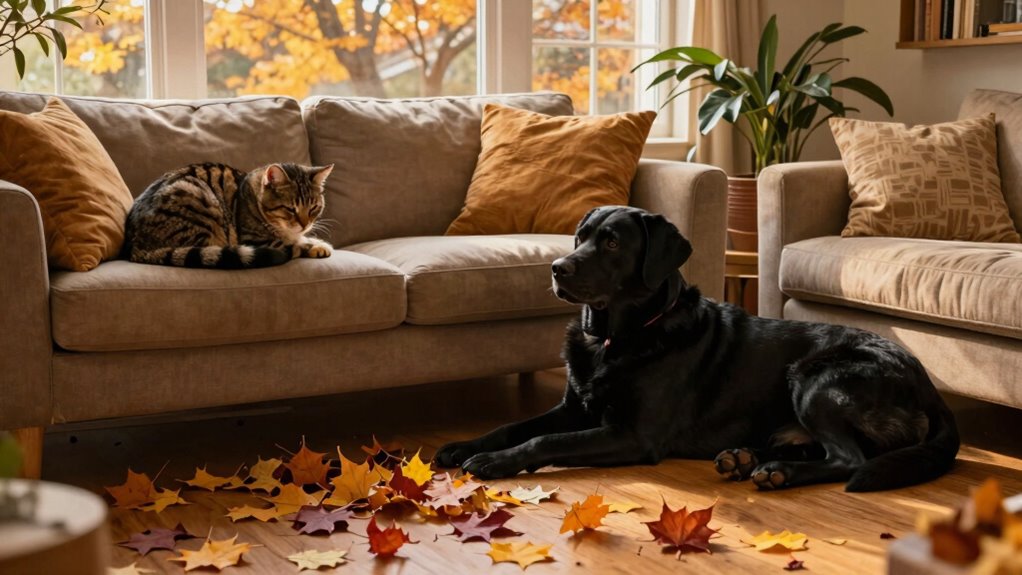

Seasonal changes indoors can cause your pet’s behavior to shift as they respond to varying light and temperature. During darker months, they may become more subdued and less active, needing extra mental and physical stimulation indoors. In warmer, sunnier seasons, your pet might become more energetic and alert. Recognizing these patterns helps you support their comfort and happiness year-round. To learn more about how to adjust care during each season, keep exploring these natural influences.

Get beauty and skincare favorites delivered free with Prime
- Fast, free delivery on millions of items
- Prime Video, Amazon Music and more included
- Member-only deals all year
Key Takeaways
- Pets may become more subdued and less active during shorter, darker days in colder months.
- Increased indoor lighting and stimulation can help counteract seasonal lethargy.
- Changes in temperature and light indoors influence pets’ mood and energy levels.
- Seasonal shifts can alter pets’ appetite and activity patterns, requiring routine adjustments.
- Providing outdoor play and mental stimulation supports natural instincts despite indoor confinement.
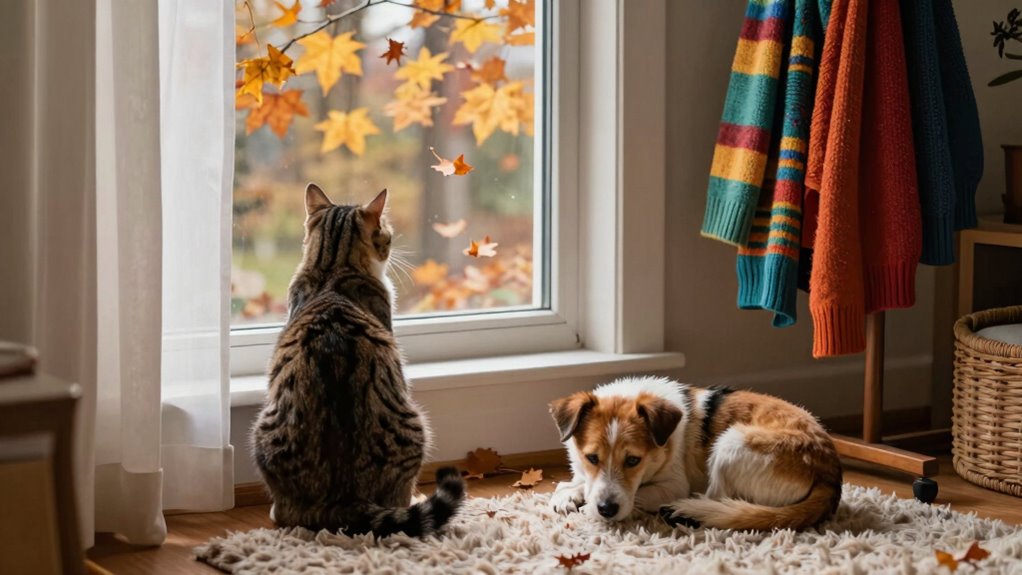
As the seasons change, you might notice your pet’s behavior shifting indoors, often in ways that reflect their natural instincts and environmental cues. One of the most noticeable effects is how their seasonal affect and activity level fluctuate throughout the year. During colder months or when days grow shorter, your pet may seem less energetic or more subdued. They might spend more time resting or sleeping, which is perfectly natural as they respond to the reduced daylight and cooler temperatures. This seasonal affect isn’t just about mood; it influences their overall activity level, leading them to be less inclined to play or explore as much as they do during warmer months.
Pets often become more subdued and rest-focused during colder, darker months, reflecting natural seasonal instincts and environmental cues.
When the seasons shift to spring or summer, you’ll likely observe a boost in your pet’s activity level. Longer daylight hours and warmer weather stimulate their natural instincts to be more active, hunt, or explore. You might see them chasing toys more enthusiastically or darting around the house with increased energy. These changes aren’t just random—they’re driven by their internal biological clock, which responds to environmental cues like sunlight and temperature. Your pet’s seasonal affect can also influence their mood, making them more alert or excitable during these times. You may notice them seeking out sunny spots near windows or basking in warm patches of sunlight, aligning with their instinct to soak up daylight.
Indoor environments can amplify these seasonal shifts. Since your pet spends most of their time indoors, they’re highly sensitive to changes in light and temperature. During darker months, you might need to encourage more activity through indoor play or mental stimulation to combat their lowered activity level. Incorporating stimulating toys can help keep their mind engaged and counteract feelings of sluggishness. Additionally, adjusting their routine to include regular outdoor playtime can help meet their increased energy needs during sunnier seasons. Their seasonal affect may also cause changes in appetite—some pets eat less when feeling down or sluggish, while others might eat more as a comfort response. Recognizing these patterns allows you to adjust their care accordingly, ensuring they stay healthy and engaged regardless of the season. Understanding their biological rhythms can help you better anticipate these changes and tailor your care to support their well-being.
Understanding how seasonal affect and activity level influence your pet’s behavior helps you create a more responsive environment. By tailoring their daily routine to match their natural instincts and environmental cues, you can support their well-being year-round. Paying attention to these subtle shifts in mood and energy helps you better meet their needs, ensuring that they remain happy, comfortable, and healthy, no matter what season it is. Recognizing seasonal biological rhythms can help you anticipate and adapt to these changes more effectively.
As an affiliate, we earn on qualifying purchases.
Frequently Asked Questions
Do Pets Experience Seasonal Affective Disorder Like Humans?
Pets can experience seasonal affective disorder, much like humans, due to photoperiod and hormonal changes. Longer nights and shorter days affect their mood and energy levels, leading to behaviors like lethargy or decreased activity. You might notice seasonal grooming routines become more frequent or altered as your pet responds to these shifts. By understanding these patterns, you can better support your pet through seasonal changes and promote their well-being.
How Can I Tell if My Pet Is Stressed by Seasonal Changes?
You can tell if your pet’s stressed by seasonal changes by observing signs like increased hiding, altered appetite, or excessive grooming. Climate change can intensify these behaviors as it disrupts their environment, triggering territorial instincts or anxiety. Pay close attention to their sleep patterns and activity levels. If these signs persist, consult your veterinarian to guarantee your pet feels secure and comfortable during these seasonal shifts.
Are There Specific Indoor Activities to Help Pets Adapt?
Think of your home as a sanctuary tree, offering shelter during seasonal storms. You can help your pet adapt by providing cozy resting spots—soft blankets and quiet corners—that serve as safe havens. Engage them with interactive play, like puzzle toys or gentle fetch sessions, to keep their minds active. These activities create a stable environment, helping your pet feel secure and comfortable as the seasons change around them.
Should I Adjust Feeding Routines During Seasonal Shifts?
Yes, you should adjust feeding schedules during seasonal shifts. As temperatures change, your pet’s activity levels and energy needs may vary, so consider offering smaller, more frequent meals or adjusting portion sizes. Incorporate temperature regulation strategies like providing cozy, warm spots in winter or cool, shaded areas in summer. These adjustments help maintain your pet’s health and comfort, ensuring they stay balanced and happy throughout the changing seasons.
Can Seasonal Allergies Affect Indoor Pet Behavior?
Yes, seasonal allergies can affect your indoor pet’s behavior. Allergy symptoms like sneezing, itching, and watery eyes often stem from indoor irritants or outdoor allergens brought inside. These discomforts may cause your pet to scratch more, become restless, or act unusually. You should monitor their reactions closely, reduce indoor irritants, and consult your vet if symptoms persist, ensuring your pet stays comfortable and healthy despite seasonal changes.
As an affiliate, we earn on qualifying purchases.
Conclusion
As the seasons shift, so too does your pet’s behavior indoors—like a mirror reflecting nature’s changing face. By paying close attention, you can anticipate their needs and adapt your routines, turning these changes into opportunities for deeper bonding. Remember, understanding your pet’s seasonal cues isn’t just about comfort; it’s about nurturing a connection that withstands the test of time. After all, isn’t love the constant amid the ever-changing seasons?
adjustable indoor pet temperature
As an affiliate, we earn on qualifying purchases.
As an affiliate, we earn on qualifying purchases.
As an affiliate, we earn on qualifying purchases.
Fall Picks
fall essentials
As an affiliate, we earn on qualifying purchases.