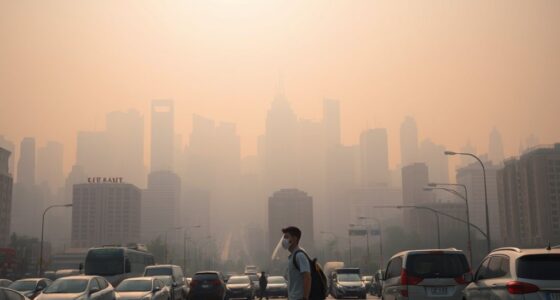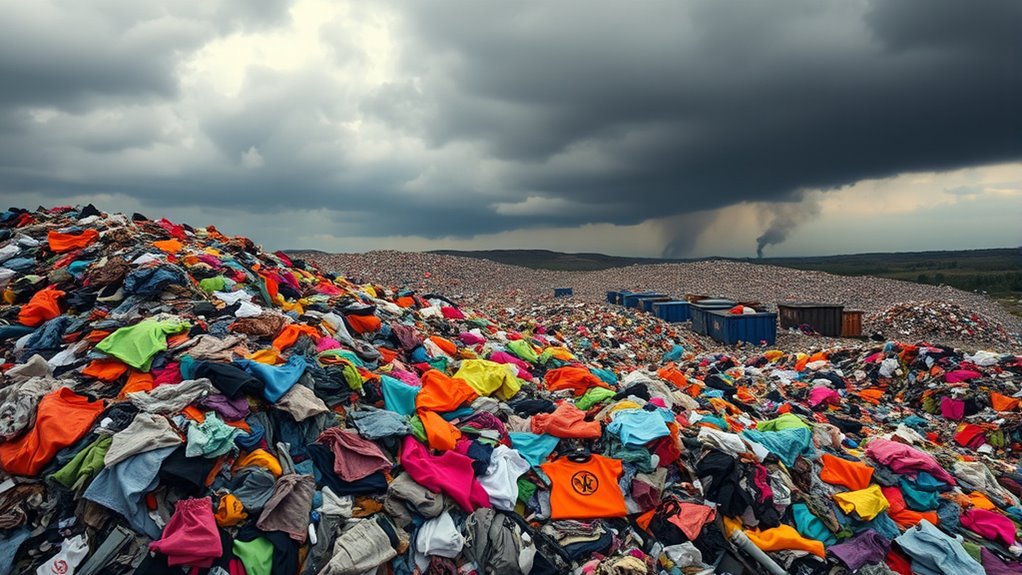

Fast fashion speeds up clothing turnover, leading you to contribute to huge textile waste and environmental harm. Cheap, trendy clothing encourages frequent purchases, filling landfills with discarded garments made from synthetic fibers that shed microplastics into our oceans. This cycle depletes resources and pollutes water and air. By understanding these impacts, you’ll see how your choices matter—if you stay with us, you’ll discover how to make smarter, eco-friendly decisions in your wardrobe.
Key Takeaways
- Fast fashion accelerates clothing turnover, increasing textile waste and landfill accumulation.
- The production of inexpensive, trendy items leads to overconsumption and environmental degradation.
- Synthetic fibers from fast fashion shed microplastics, polluting oceans and harming marine life.
- Water pollution and carbon emissions are amplified by rapid manufacturing and disposal processes.
- Consumer choices favoring sustainable options can reduce textile waste and lessen environmental impact.

Have you ever wondered how your quick wardrobe updates contribute to a growing environmental crisis? Every time you buy a new piece of clothing, especially from fast fashion brands, you’re part of a cycle that has serious ecological consequences. Fast fashion thrives on producing cheap, trendy items that encourage frequent purchases, leading to an enormous amount of textile waste. But more than just waste, the environmental impact extends to water pollution, carbon emissions, and resource depletion. As a consumer, your choices matter, and increasing consumer awareness can drive change toward more sustainable alternatives.
Your fast fashion choices impact the environment through waste, pollution, and resource depletion—your awareness can drive sustainable change.
Sustainable alternatives are gaining traction as people realize the harm caused by fast fashion. Instead of buying new clothes every season, you can opt for high-quality, durable pieces that last longer. Shopping second-hand, swapping clothes with friends, or investing in timeless styles reduces the demand for fast, disposable fashion. You might also explore brands committed to eco-friendly practices—those that use organic or recycled materials, minimize waste during production, and ensure fair labor conditions. Choosing these options not only cuts down your personal carbon footprint but also signals to the industry that sustainable practices are profitable and valued.
Your awareness about the environmental costs of fast fashion is vital. When you educate yourself about how textile waste clogs landfills and how synthetic fibers shed microplastics into oceans, you’re better equipped to make responsible choices. For instance, understanding that polyester and other synthetic fabrics are derived from fossil fuels can motivate you to select natural fibers like cotton, hemp, or linen. These materials are biodegradable and have a lower environmental impact. Additionally, being conscious of the lifecycle of your garments influences how you dispose of them—donating, recycling, or repurposing clothes extends their usefulness and prevents unnecessary waste.
By actively choosing sustainable alternatives, you contribute to a shift in consumer behavior that pressures brands to adopt greener practices. Your purchasing decisions can support companies that prioritize transparency, ethical sourcing, and eco-friendly production methods. As more consumers become aware of the environmental toll of fast fashion, the industry may respond by offering more sustainable options and reducing overproduction. This collective awareness and action can help curb the textile waste mountain and lessen the pollution burden on our planet.
Ultimately, your role as a conscious consumer isn’t just about saving money or staying trendy; it’s about making a positive impact on the environment. Every mindful purchase and sustainable choice pushes the industry toward a future where fashion doesn’t come at the planet’s expense. Awareness fuels change, and your actions can lead the way to a more sustainable, less wasteful apparel cycle. Recognizing the importance of clothing lifecycle management can further enhance your efforts to reduce textile waste and minimize environmental harm.
Frequently Asked Questions
How Does Fast Fashion Impact Water Pollution Globally?
Fast fashion markedly impacts water pollution worldwide by causing water contamination through dye runoff. When factories wash out excess dyes and chemicals, these pollutants enter nearby water bodies, harming aquatic life and contaminating drinking water sources. You might not see it directly, but your fast fashion choices contribute to this issue, as the industry’s rapid production process often neglects proper waste management, leading to increased dye runoff and environmental damage.
What Are the Main Chemicals Used in Fast Fashion Textiles?
You should know that fast fashion textiles primarily use chemical dyes and synthetic fibers. Chemical dyes give fabrics vibrant colors but can release toxic substances into water systems during manufacturing and washing. Synthetic fibers like polyester and nylon are derived from petrochemicals, contributing to pollution and microplastic pollution in oceans. These chemicals and fibers are common in fast fashion, making it essential for you to contemplate sustainable choices and demand eco-friendly alternatives.
How Can Consumers Reduce Textile Waste Effectively?
Think of your wardrobe as a garden—you reap what you sow. To reduce textile waste, focus on clothing recycling and sustainable shopping. Opt for high-quality pieces you’ll wear longer, and donate or resell items instead of tossing them out. By making mindful choices, you help cut down waste and conserve resources. Small actions, like choosing eco-friendly brands, can make a big difference in creating a more sustainable future.
What Policies Are in Place to Regulate Fast Fashion Practices?
You’ll find policies promoting sustainable sourcing and factory regulations in many countries, aiming to curb fast fashion’s impact. Governments enforce standards requiring ethical labor practices and environmentally friendly materials. Some regions implement stricter regulations, pushing brands to adopt sustainable sourcing and transparent supply chains. While enforcement varies, these policies are designed to hold fast fashion companies accountable, encouraging them to reduce waste and environmental harm. Staying informed helps you support brands complying with these regulations.
How Does Textile Waste Affect Wildlife and Ecosystems?
Imagine vibrant forests and oceans, now choked with discarded textiles. Textile waste disrupts habitats, suffocating ecosystems and threatening wildlife. Birds, fish, and other species mistake synthetic fibers for food, leading to poisoning and injury. This habitat disruption pushes many species toward endangerment, destabilizing biodiversity. Your choices influence this cycle—reducing waste helps protect ecosystems and preserve the natural world’s delicate balance.
Conclusion
By now, you see how fast fashion fuels a never-ending cycle of waste, polluting our planet like a relentless storm. Every cheap shirt you buy adds to the mountain of textile waste choking our environment. If you choose to ignore this tide, you’ll be sailing into troubled waters. But if you act now, you’re the lighthouse guiding change, showing that even small actions can turn the tide and restore the balance our Earth desperately needs.