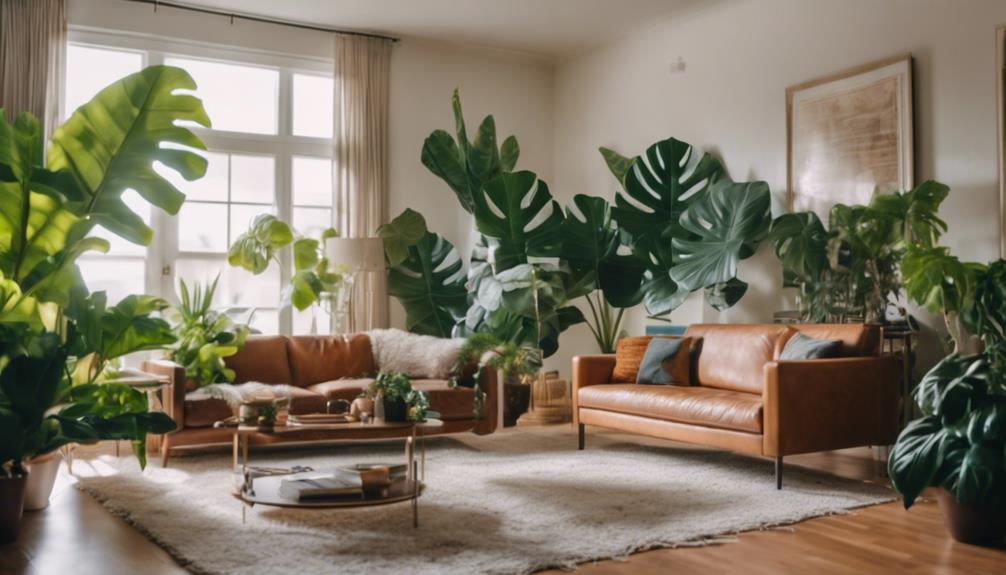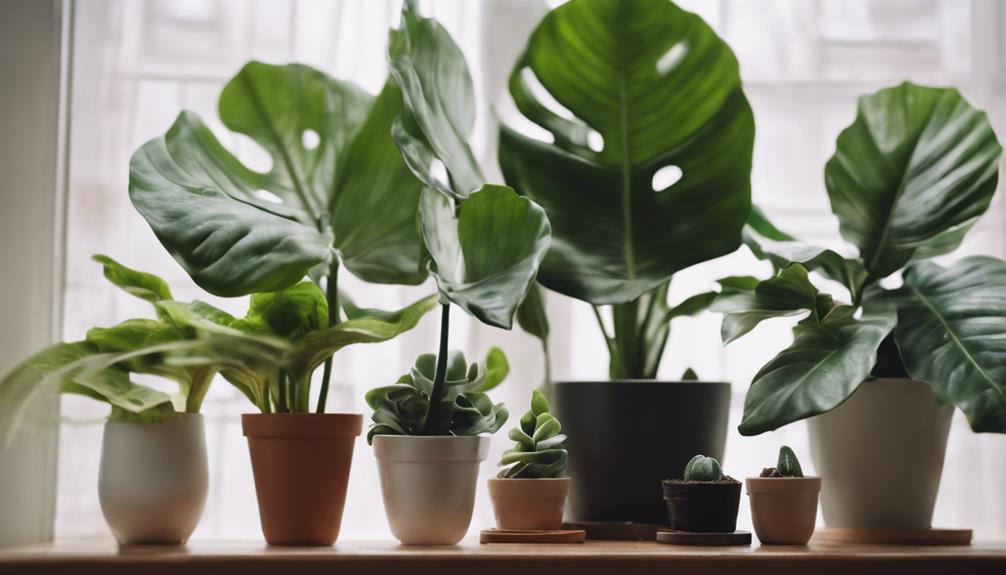
To make your home healthier, consider adding air-purifying plants like snake plants, pothos, peace lilies, rubber plants, and ferns. They effectively remove toxins, boost oxygen levels, and create a calming environment. Most thrive with minimal fuss and need indirect sunlight and moderate watering. Proper care keeps them healthy and maximizes their air-cleaning benefits. Keep exploring for tips on selecting and maintaining the best plants for your space to enjoy fresher air every day.
Key Takeaways
- Hardy plants like snake plants and pothos are low-maintenance options that effectively purify indoor air.
- Peace lilies and rubber plants excel at removing toxins while adding decorative appeal.
- Regular dusting and proper watering enhance the plants’ ability to filter pollutants.
- Indirect sunlight and moderate humidity support optimal growth and air-cleaning performance.
- Incorporating a variety of shapes and textures improves aesthetics while maximizing air purification.
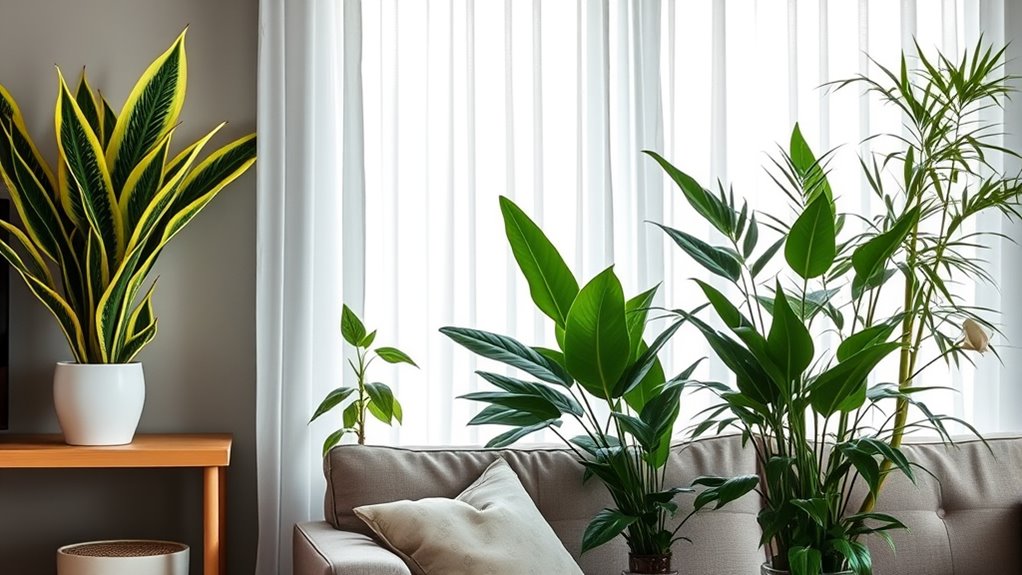
Have you ever wondered how indoor plants can improve the air you breathe? Bringing plants into your home isn’t just about adding a touch of nature; it’s about creating a healthier environment. Many indoor plants are known for their air-purifying qualities, helping to reduce toxins and increase oxygen levels. But to enjoy their benefits, you need to understand plant care. Proper care ensures your plants thrive, which in turn maximizes their air-cleaning potential. Whether you prefer lush, leafy varieties or sleek, decorative types, choosing the right plants and maintaining them properly is key.
Indoor plants boost air quality and create a healthier, more vibrant home environment.
When it comes to plant care, understanding each species’ needs is essential. Most air-purifying plants prefer indirect sunlight and moderate watering—too much water can lead to root rot, while too little can cause drooping leaves. Regularly dusting the leaves keeps their pores open, allowing them to absorb pollutants efficiently. Also, be mindful of the humidity levels; some plants thrive in higher moisture environments, so misting or placing a humidifier nearby can boost their health. If you’re new to plant care, start with hardy varieties like snake plants or pothos, which are forgiving and low-maintenance. These plants are excellent for busy households or those just beginning their indoor gardening journey.
Decorative varieties also play a significant role in enhancing your home’s aesthetic while purifying the air. Many plants come in eye-catching shapes, vibrant colors, and interesting textures, making them perfect for integrating into your decor. For example, the peace lily not only removes toxins but also features elegant white flowers that brighten any room. The rubber plant offers broad, glossy leaves that add a modern touch, while the fern provides a lush, jungle-like vibe. These decorative varieties can be placed on shelves, tables, or hanging planters, adding visual interest while improving air quality. Choosing the right mix of plants depends on your space, lighting conditions, and personal style. Understanding plant care needs is essential for maintaining healthy, effective air-purifying plants.
Incorporating air-purifying plants into your home doesn’t require a green thumb—just a little attention to plant care and selecting decorative varieties that suit your space. With consistent watering, proper light exposure, and occasional cleaning, your indoor plants will flourish and actively work to keep your environment healthier. Plus, their aesthetic appeal creates a calming, inviting atmosphere, making your home not only cleaner but also more beautiful. So, start small, learn what each plant needs, and soon you’ll enjoy fresher air and a greener, more vibrant living space.

Costa Farms Live Indoor House Plants (6-Pack), Hand Selected Easy to Maintain Indoor Assorted Houseplants, Curated Air Purifying Mix, Low Light, Home Office Decor Plant Gift
THE PERFECT MOTHER'S DAY GIFT: Treat Mom to a curated bundle of six beautiful live houseplants, perfect for…
As an affiliate, we earn on qualifying purchases.
As an affiliate, we earn on qualifying purchases.
Frequently Asked Questions
Which Indoor Plants Are Safest for Households With Pets?
If you want pet-safe plants, opt for non-toxic greenery like spider plants, Boston ferns, or areca palms. These pet-safe plants won’t harm your furry friends if they nibble on them. Always double-check before bringing new greenery into your home, and place plants out of your pet’s reach when possible. Choosing pet-safe plants helps create a healthy, toxin-free environment for both your pets and your household.
How Often Should I Water My Air-Purifying Indoor Plants?
Think of your indoor plants like delicate dancers needing just the right rhythm. You should water your air-purifying indoor plants when the top inch of soil feels dry, typically once a week. Stick to a consistent watering schedule to maintain ideal plant hydration. Overwatering can drown their roots, so always check soil moisture first. Adjust frequency based on seasons and indoor conditions for healthy, thriving plants.
Do All Indoor Plants Improve Air Quality Equally?
Not all indoor plants improve air quality equally. Different plant species have varying air filtration efficiency, so some are better at removing pollutants like formaldehyde or benzene. For example, snake plants and pothos excel at air purification, while others may have limited effects. To maximize air quality, choose species known for high filtration efficiency, and guarantee proper care to keep your plants healthy and effective.
Can Indoor Plants Help Reduce Indoor Humidity Levels?
Indoor plants can help with humidity regulation by absorbing excess moisture, which helps reduce indoor humidity levels. This can be especially beneficial in damp or poorly ventilated spaces. By maintaining ideal humidity, plants also aid in mold prevention, creating a healthier environment. Keep in mind, however, that while they contribute to humidity control, they shouldn’t replace dehumidifiers or proper ventilation for more significant moisture issues.
Are There Any Indoor Plants That Require Minimal Sunlight?
Yes, you can choose low light plants or shade-tolerant greenery for your home. Plants like snake plants, pothos, and ZZ plants thrive with minimal sunlight, making them ideal for darker corners. They require less direct light, so you don’t need a bright window for them to grow healthily. These plants are perfect for spaces with limited natural light, and they help purify your indoor air effortlessly.

PLANTVERS Live Calathea Plant – Easy Care & Low Maintenance Tropical Houseplant – Air Purifying Indoor Plant for Low Light & Home Décor (Calathea Vittata 4" Grow Pot, 4" Grow Pot)
TROPICAL BEAUTY: Calathea features stunning patterned foliage with unique variegation, making it a gorgeous decorative accent for any…
As an affiliate, we earn on qualifying purchases.
As an affiliate, we earn on qualifying purchases.
Conclusion
Bringing these air-purifying plants into your home is like planting tiny lungs that work tirelessly to refresh your space. They act as nature’s air filters, turning your indoor environment into a sanctuary of clean, breathable air. With each leaf and root working in harmony, you create a living shield against pollutants. So, nurture these green guardians, and let your home breathe easier—turning your space into a lush, vibrant oasis of health and vigor.

6FT Artificial Dracaena Tree, Fake Tree Indoor with White Tall Planter,Tall Artificial Plants Indoor,Artificial Silk Tree for Home Office Decor (White)
Lifelike appearance design: Artificial tree foliage design is delicate and realistic, as if it has meticulously replicated the…
As an affiliate, we earn on qualifying purchases.
As an affiliate, we earn on qualifying purchases.

Melphoe 25Pcs Mini Garden Hand Transplanting Succulent Tools Set, 39.4" Thickened Repotting Mat & Plant Tag, Miniature Planting Indoor Fairy Care, Potting, Cactus, Houseplant Bonsai Tool Kit (Black)
Comprehensive Small Garden Tools: Our indoor garden kit Not only for succulents, but also suitable for bonsai plants,…
As an affiliate, we earn on qualifying purchases.
As an affiliate, we earn on qualifying purchases.