To effectively use positive reinforcement, give immediate feedback with a clicker or praise right after your pet performs the desired behavior, ensuring they associate their actions with rewards. Keep sessions short, fun, and consistent, ending on a positive note. Patience and persistence are key—this approach builds trust and speeds up learning. If you’re enthusiastic to improve your training skills, there’s plenty more helpful tips to discover that can make a big difference.
Key Takeaways
- Reward behaviors immediately with treats or praise to reinforce correct actions effectively.
- Use a clicker to mark the exact moment of desired behavior for clear communication.
- Keep training sessions short, positive, and end on a successful note to maintain enthusiasm.
- Be consistent with timing and cues to help pets quickly associate behaviors with rewards.
- Patience and persistence are key; reinforce good behavior regularly to strengthen learning.
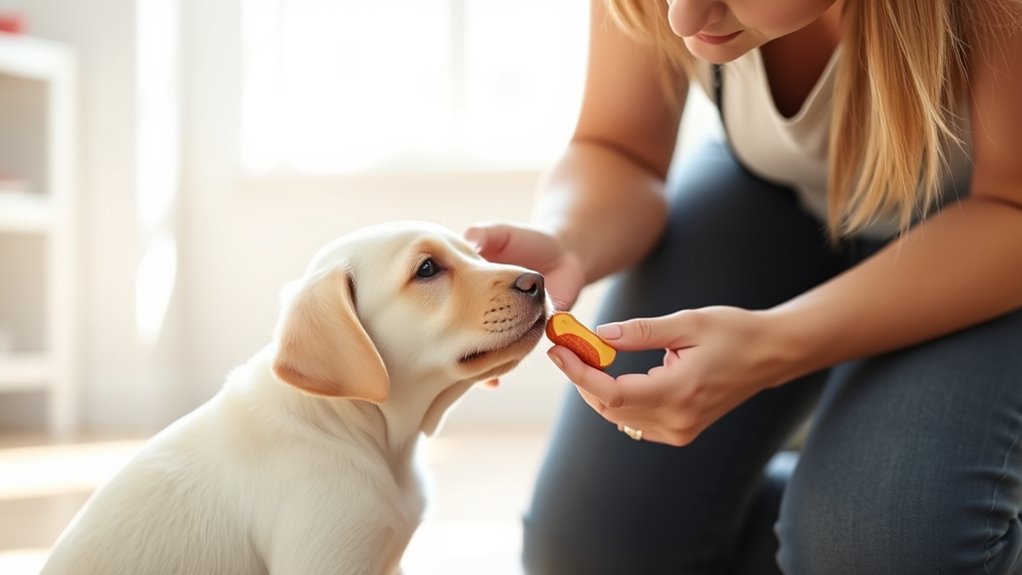
Positive reinforcement is one of the most effective methods for training pets and encouraging desirable behavior. When you focus on rewarding good actions, your pet learns to associate those behaviors with positive outcomes, making them more likely to repeat them. One popular technique to enhance your training sessions is clicker training, which uses a small device that emits a distinct sound to mark the exact moment your pet performs the correct behavior. This sound acts as a bridge between the behavior and the reward, helping your pet understand precisely what earned the treat. To make clicker training effective, timing is everything—reward timing must be spot-on. As soon as your pet performs the desired action, you should immediately click and then provide a treat. This quick response helps your pet connect the behavior with the reward, creating a clear and consistent message.
When using clicker training, your goal is to be precise with your timing. If you wait too long after the behavior occurs, your pet might get confused about what exactly is being rewarded. For example, if your dog sits, click instantly the moment their butt hits the ground and then give the treat. This immediate feedback reinforces the behavior strongly. Over time, your pet will associate the click with the correct action, and the reward will serve as motivation to repeat it. Consistency in reward timing is key; practicing this regularly helps your pet learn faster and reduces frustration for both of you. Remember, the goal is to make the connection between the behavior and the reward as clear as possible, so your pet understands exactly what you want. Proper reward timing is essential for effective training and faster learning.
Another tip to optimize your training is to keep sessions short and positive. End on a high note by rewarding your pet for a good performance, even if it’s just a small step toward the overall goal. This encourages them to stay engaged and enthusiastic to learn more. Use the clicker as a precise marker to communicate success, and always follow it with a treat or praise. This consistency builds trust and confidence in your pet, making training sessions more effective. Be patient and persistent; pets learn at different rates, but with proper reward timing and the aid of clicker training, you’ll see progress more quickly and with less frustration. Ultimately, positive reinforcement combined with sharp reward timing creates a fun, rewarding experience that fosters a strong bond between you and your pet while teaching them desirable behaviors.
clicker training for dogs
As an affiliate, we earn on qualifying purchases.
As an affiliate, we earn on qualifying purchases.
Frequently Asked Questions
How Do I Handle Setbacks During Positive Reinforcement Training?
When setbacks happen, stay patient and consistent, as progress isn’t always linear. Take a step back and evaluate your techniques, adjusting them if needed to better suit your dog’s learning style. Remember, setbacks are normal; use them as opportunities to reinforce positive behavior and build trust. Keep your tone upbeat, reward small successes, and stay committed. Over time, your persistence will help your dog overcome challenges and improve.
Can Positive Reinforcement Work With Aggressive or Fearful Dogs?
Yes, positive reinforcement can work with aggressive or fearful dogs. You need to pay close attention to their body language and environmental triggers to guarantee you’re not overwhelming them. Use treats and praise to reward calm behavior, gradually helping them build confidence. Keep sessions short and positive, and always respect their limits. With patience and consistency, you can help your dog overcome fears and reduce aggression effectively.
What Are the Signs of Effective Positive Reinforcement Training?
You’ll know your positive reinforcement training is effective when your dog responds reliably to cues, shows enthusiasm, and stays motivated. Make sure your clicker timing is precise—immediately after the desired behavior—to reinforce the action. Consistent praise also helps your dog understand what’s expected. When your dog’s behavior improves and they keenly participate, it’s a clear sign your training is working well and building a trusting bond.
How Long Does It Typically Take to See Results?
You’ll usually see results within a few days to a few weeks, but it depends on your timing, consistency, patience, and persistence. If you reward immediately after desired behavior, your dog learns faster. Stay consistent with commands and rewards, and don’t get discouraged if progress seems slow. Keep training sessions short and positive, and you’ll notice improvements as your dog gradually understands what you want.
Are There Age Considerations for Starting Positive Reinforcement Training?
Age considerations play a role in positive reinforcement training, but you can start at any age. Younger dogs often pick up training milestones quickly, but older dogs can learn just as well with patience and consistency. Tailor your approach based on your dog’s age, ensuring gentle, positive interactions. Remember, the key is to be patient and consistent, regardless of age, to achieve successful training milestones.
positive reinforcement pet treats
As an affiliate, we earn on qualifying purchases.
As an affiliate, we earn on qualifying purchases.
Conclusion
Imagine your pet’s tail wagging happily as they ardently respond to your kind words and treats. With patience and consistency, you paint a brighter, more trusting bond between you two. Every small success is a splash of color on your shared canvas, making training feel like a joyful journey rather than a chore. Keep practicing positive reinforcement, and watch as your bond grows stronger, filled with trust, love, and countless happy moments to cherish.
dog training clicker and treats set
As an affiliate, we earn on qualifying purchases.
As an affiliate, we earn on qualifying purchases.
pet training praise and reward tools
As an affiliate, we earn on qualifying purchases.
As an affiliate, we earn on qualifying purchases.