An ergonomic chair alone won’t boost your health unless you actively work on fixing poor sitting patterns. It supports better alignment, but you need to consciously adopt proper posture, take regular movement breaks, and make workspace adjustments. Without these habits, the chair can’t prevent pain or discomfort. To truly benefit, you must engage with the features and stay aware of your body’s signals—there’s more to discover if you keep exploring these tips.
Key Takeaways
- Ergonomic chairs alone cannot improve health without proper posture and active user engagement.
- Correct sitting habits and posture adjustments are essential for ergonomic benefits.
- Movement and regular posture checks prevent discomfort, regardless of chair features.
- Setting reminders and workspace adjustments support effective ergonomic use.
- The chair is a tool; long-term wellness depends on conscious habits and posture awareness.
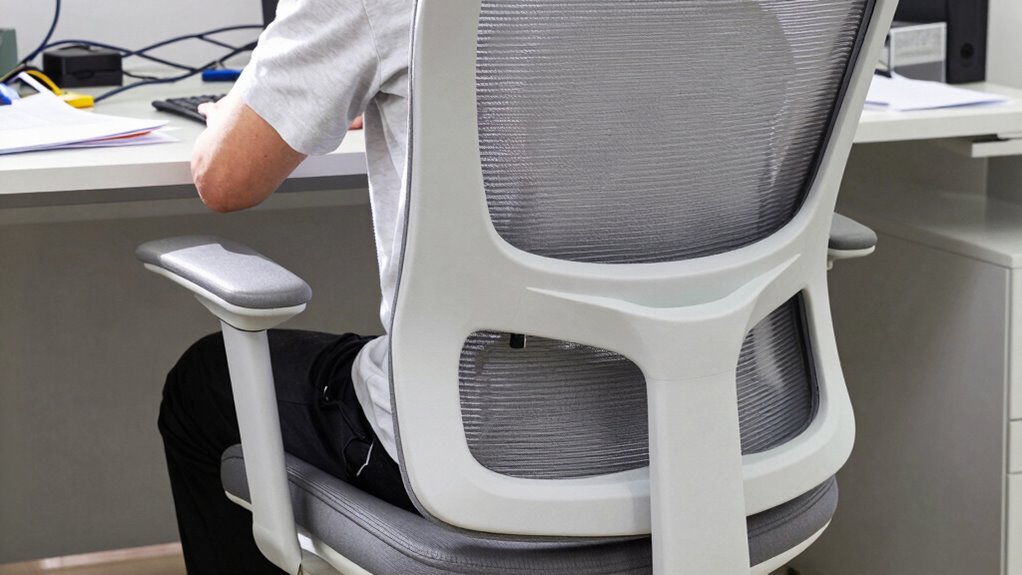
Many people buy ergonomic chairs expecting they’ll automatically improve their health and comfort, but the truth is, these chairs only deliver value if they address a specific, often overlooked pattern of poor posture. Simply sitting in an ergonomic chair won’t make a difference if you don’t actively correct the way you sit. Posture correction is essential. Without it, you risk developing pain and discomfort, regardless of how advanced the chair is. An ergonomic chair can support better alignment, but it can’t force you to sit properly. You need to be mindful of how you position yourself and make conscious adjustments to your sitting habits. Recognizing how Posture correction impacts overall health is crucial for long-term comfort.
When you focus on posture correction, you help prevent common issues like back pain, neck strain, and shoulder tension. These problems often stem from habits such as slouching, leaning forward, or craning your neck to look at your screen. An ergonomic chair can encourage proper alignment, but only if you actively engage with it. This means adjusting the chair to fit your body, maintaining a neutral spine, and keeping your feet flat on the floor. Regularly checking your posture helps reinforce healthy habits, turning the chair into a tool for pain prevention rather than just a support. Developing awareness of body mechanics is essential for making the most of your ergonomic setup. Paying attention to movement habits throughout the day can also enhance your posture and reduce strain.
Pain prevention is closely linked to how well you correct your posture. When you sit with poor alignment, you put strain on your muscles, ligaments, and discs, which can lead to chronic pain over time. An ergonomic chair is designed to provide proper lumbar support and promote good positioning, but it won’t do the job alone. You need to be proactive. Set reminders to sit upright, stretch regularly, and adjust your workspace to ensure your body remains in a neutral position. These small habits, combined with understanding posture awareness, make a significant difference in reducing tension and avoiding long-term pain. Recognizing early signs of discomfort can help you make timely adjustments and prevent lingering issues.
Ultimately, buying an ergonomic chair is only the first step. To truly benefit from it, you must focus on posture correction and pain prevention. Think of the chair as a supportive tool rather than a quick fix. It’s your responsibility to develop good sitting habits, stay aware of your body’s signals, and make adjustments as needed. When you combine these efforts, you’ll not only improve your comfort but also protect yourself from the aches and pains that come with poor posture. This proactive approach transforms an ergonomic chair from a mere purchase into a genuine investment in your health and well-being.
ergonomic office chair with lumbar support
As an affiliate, we earn on qualifying purchases.
As an affiliate, we earn on qualifying purchases.
Frequently Asked Questions
Are All Ergonomic Chairs Equally Effective for Back Pain?
Not all ergonomic chairs are equally effective for back pain. You need to take into account design aesthetics and material durability—chairs with proper lumbar support and adjustable features target your specific back issues better. Cheaper materials may wear out quickly, reducing support and comfort over time. Opt for a chair that balances good design, durable materials, and ergonomic features, ensuring it genuinely helps relieve your back pain rather than just looking appealing.
How Long Does It Typically Take to See Benefits From an Ergonomic Chair?
You might start noticing benefits from an ergonomic chair within a few days to a few weeks, especially if it helps correct your posture. Don’t fall for ergonomic chair myths that suggest instant relief—posture correction takes time. Consistently using the chair, maintaining proper alignment, and taking breaks are essential. Over time, you’ll likely experience less discomfort and improved comfort, but patience is key to truly reprogram your sitting habits.
Can Ergonomic Chairs Prevent Long-Term Posture Issues?
Think of an ergonomic chair as a sturdy shield for your musculoskeletal health. Yes, it can prevent long-term posture issues by encouraging proper alignment and supporting your spine daily. With consistent posture correction, it acts like a steady anchor amid restless seas, safeguarding your future comfort. Investing in one isn’t just about comfort now; it’s about nurturing your long-term musculoskeletal health and steering clear of pain and injury down the road.
What Are Signs That My Ergonomic Chair Isn’t Working?
If your ergonomic chair isn’t effective, you’ll notice poor posture correction, like slouching or leaning forward, despite adjustments. You might also feel persistent discomfort or pain in your neck, back, or hips after hours of sitting. These signs indicate the chair isn’t supporting proper alignment or providing discomfort relief. When these issues occur, it’s a clear sign you need to reevaluate your chair’s fit or consider additional ergonomic solutions.
Do Ergonomic Chairs Improve Productivity or Focus?
You might notice a boost in productivity and focus when your ergonomic chair looks good and aligns with trusted brand reputation. A chair’s aesthetics can motivate you to sit more comfortably, reducing distractions. When you feel supported and confident in your workspace, your focus sharpens naturally. So, yes, a well-designed, reputable chair can improve your work experience, making you more efficient without even realizing it at first.
adjustable ergonomic chair for proper posture
As an affiliate, we earn on qualifying purchases.
As an affiliate, we earn on qualifying purchases.
Conclusion
If your ergonomic chair doesn’t banish your endless slouching and turn sitting into a superhero feat of perfect posture, then it’s just another fancy chair collecting dust. You’re not just wasting money—you’re fueling a never-ending cycle of discomfort and poor health. So, unless that chair heroically transforms your posture and banishes back pain forever, it’s not a wellness purchase; it’s just a throne for your daily misery! Choose wisely, or suffer the throne’s wrath.
desk posture reminder device
As an affiliate, we earn on qualifying purchases.
As an affiliate, we earn on qualifying purchases.
ergonomic chair accessories for better alignment
As an affiliate, we earn on qualifying purchases.
As an affiliate, we earn on qualifying purchases.