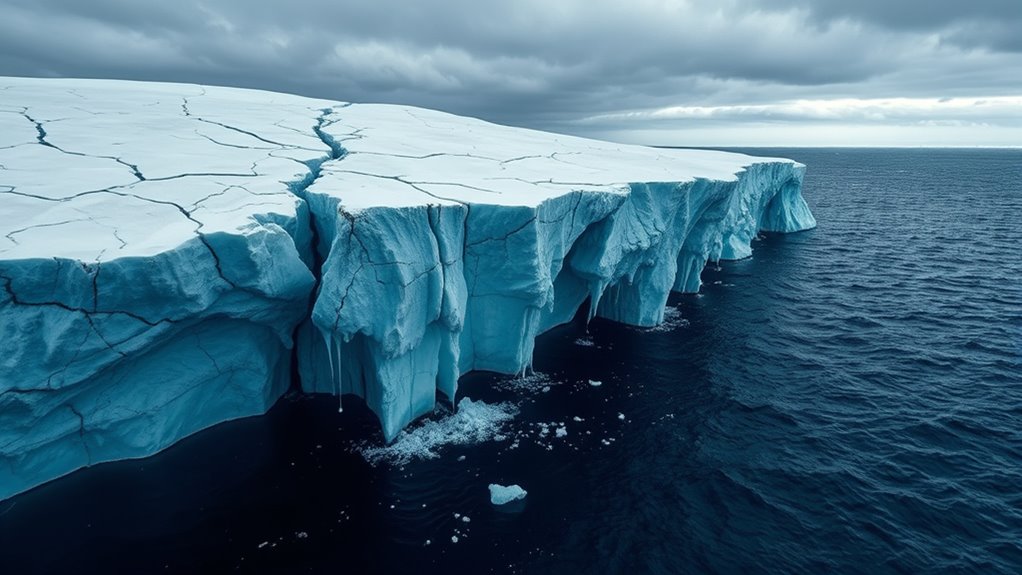
As the polar ice caps melt due to rising global temperatures, sea levels will keep rising, which could lead to flooding in coastal areas and threaten ecosystems. Coastal cities, small islands, and communities face increased risks of erosion, storm surges, and displacement. This process also creates feedback loops, speeding up warming and melting further. If you want to understand how these changes could impact you and the planet, there’s more to uncover below.
Key Takeaways
- Melting ice caps significantly contribute to global sea level rise, threatening coastal communities worldwide.
- Accelerated melting due to climate change worsens sea level increase through feedback loops.
- Rising sea levels cause flooding, erosion, and habitat loss for ecosystems and human settlements.
- Small island nations face existential risks, including potential disappearance beneath rising waters.
- Mitigating ice melt requires collective action to reduce carbon emissions and support renewable energy initiatives.

Have you ever wondered what happens when the world’s ice caps melt? As global temperatures continue to rise, the climate change impact becomes increasingly evident through the accelerated polar ice melt. This process isn’t just about losing chunks of ice; it’s about a fundamental shift in our planet’s climate system that will have serious consequences. When the polar regions warm, the ice that once remained stable starts to break apart and melt at a faster rate. This melting contributes directly to rising sea levels, which threaten coastal communities, ecosystems, and economies worldwide. You might not see the immediate effects in your daily life, but the long-term implications are undeniable. As the ice caps diminish, the additional water finds its way into our oceans, steadily increasing their volume and raising sea levels.
The climate change impact on polar ice melt is compounded by feedback loops. For example, as ice melts, it reveals darker ocean or land surfaces underneath, which absorb more heat instead of reflecting it away. This absorption accelerates warming in polar regions, leading to even more ice melt. It’s a vicious cycle that speeds up the process, making it harder to reverse or slow down. The consequences aren’t limited to just rising waters. You should also consider how changing sea levels influence weather patterns, marine life, and global climate stability. Coastal cities may experience more frequent flooding, stronger storm surges, and erosion, forcing millions to relocate or adapt quickly. Small island nations are especially vulnerable, with some facing the real threat of disappearing entirely beneath the waves.
Your role in this reality is significant. The choices you make—whether reducing carbon footprints, supporting renewable energy, or advocating for climate policies—can help mitigate the impact of polar ice melt. While individual actions alone won’t stop the process, collective efforts can slow down the rate of ice loss and buy time for adaptation strategies. It’s vital to recognize that the melting of the ice caps isn’t a distant problem; it’s happening now, and the ripple effects are already impacting communities around the world. The more aware you are of the climate change impact driving polar ice melt, the better equipped you’ll be to understand the urgency of addressing this crisis. Ultimately, the fate of our planet depends on how quickly and effectively we respond to these mounting challenges. Additionally, understanding the feedback loops involved in ice melt can help us develop better models for predicting future sea level rise and climate impacts.
flood protection sandbags
As an affiliate, we earn on qualifying purchases.
As an affiliate, we earn on qualifying purchases.
Frequently Asked Questions
How Quickly Are Sea Levels Expected to Rise in the Next Decade?
In the next decade, sea levels are expected to rise about 1 to 3 inches, depending on ice sheet stability and thermal expansion. You should watch how quickly ice sheets melt and how ocean temperatures increase, as these factors accelerate sea level rise. Rapid melting of ice sheets and increased thermal expansion from warming waters can lead to higher-than-expected increases, so staying informed helps you prepare for potential impacts.
Which Regions Will Be Most Affected by Rising Sea Levels?
You’ll find coastal cities and island nations most affected by rising sea levels. These areas face increased flooding, erosion, and damage to infrastructure. Coastal cities like Miami and Jakarta experience frequent storm surges, while low-lying island nations such as the Maldives risk becoming uninhabitable. Prepare for more frequent and severe impacts as sea levels continue to rise, threatening your safety, homes, and livelihoods in these vulnerable regions.
How Do Melting Ice Caps Impact Global Ocean Currents?
Imagine polar ice melting into the ocean, disrupting the steady flow of thermohaline circulation. As polar ice melts, fresh water dilutes salty seawater, weakening the sinking of dense water that drives ocean currents. This slowdown alters global climate patterns, affecting weather systems worldwide. You might notice changes in marine ecosystems and shifts in climate zones, highlighting how melting polar ice directly impacts the essential thermohaline circulation.
What Are the Potential Economic Consequences of Rising Sea Levels?
You’ll face costly infrastructure repairs and increased insurance challenges as sea levels rise. Coastal properties become harder to insure, leading to financial strain for homeowners and businesses. Governments may need to invest heavily in flood defenses, which can divert funds from other crucial projects. Overall, rising sea levels threaten economic stability by driving up costs, reducing property values, and creating uncertain markets, making it harder for communities to recover from climate impacts.
Can Technological Solutions Effectively Counteract Sea Level Rise?
You can’t put all your eggs in one basket, but technological solutions like geoengineering interventions and artificial barriers do offer hope. While they can effectively slow or control sea level rise, they’re not foolproof and come with risks. You should see these as part of a broader strategy, combining technology with sustainable practices. Innovation can help, but it’s no silver bullet; proactive efforts are essential.
coastal erosion barriers
As an affiliate, we earn on qualifying purchases.
As an affiliate, we earn on qualifying purchases.
Conclusion
As the ice caps melt, your world gradually transforms like a fragile glass shattering under pressure. Rising sea levels threaten to swallow coastlines and reshape communities, reminding you that the future is in your hands. Every action you take today is a drop in the vast ocean of change. If you ignore the signs, you risk watching the shoreline of your life slowly disappear—like footprints washed away by relentless waves.
solar energy home kits
As an affiliate, we earn on qualifying purchases.
As an affiliate, we earn on qualifying purchases.
storm surge flood barriers
As an affiliate, we earn on qualifying purchases.
As an affiliate, we earn on qualifying purchases.