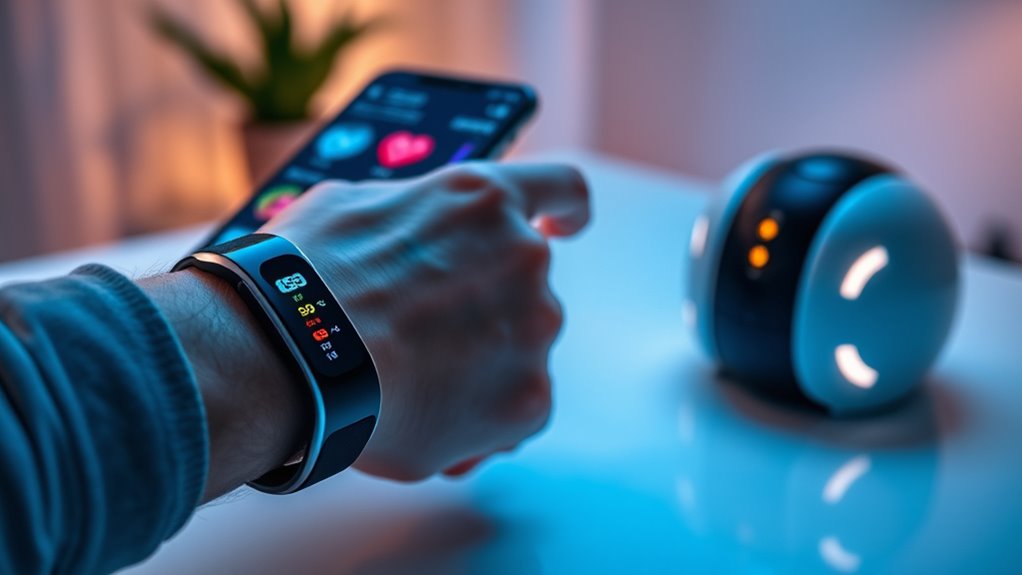

Wearables, apps, and AI are revolutionizing your wellness by giving you personalized tools to monitor sleep, track stress, and improve mental health. These devices collect real-time data on your body and mind, offering clear insights and tailored strategies for better rest and emotional balance. They help you recognize early signs of health issues and develop healthier routines. Keep exploring how these innovative tools can support your journey to a more vibrant, healthier life.
Key Takeaways
- Wearables and apps act as personalized health assistants, tracking sleep, mood, and stress for better wellness management.
- Sleep tracking devices identify disruptions and recommend hygiene improvements to enhance rest and mental health.
- Mental health apps provide mindfulness, stress tools, and AI-driven personalized coping strategies.
- Clear data visualization helps users understand health trends, detect early issues, and encourage proactive habits.
- Integrating wellness tech empowers healthier routines, early issue detection, and promotes overall physical and mental well-being.

Have you ever wondered how technology can enhance your well-being? Today, wearables, apps, and AI are transforming the way you approach health, making it easier to stay on top of your mental health and sleep habits. These tools aren’t just gadgets; they’re personalized assistants that help you understand your body and mind better, empowering you to make informed decisions every day.
One of the biggest breakthroughs in wellness technology is sleep tracking. Sleep is fundamental to your mental health, yet many of us struggle to get enough quality rest. With a simple wearable device or smartphone app, you can monitor your sleep patterns effortlessly. These devices track your sleep duration, quality, and cycles, providing insights into how well you’re resting. They identify disruptions, such as waking up frequently or tossing and turning, and often recommend changes to improve your sleep hygiene. By viewing detailed sleep data, you can pinpoint habits that negatively impact your rest—like late-night screen time or caffeine intake—and adjust accordingly. Over time, these small tweaks can lead to more restful nights, better mood, and increased focus during the day.
Beyond sleep tracking, technology plays an indispensable role in supporting your mental health. Mental health apps offer meditation guides, mood journals, and stress management tools that are accessible right from your pocket. They provide real-time feedback and personalized exercises to help you manage anxiety, depression, or everyday stress. Some apps even use AI to analyze your input and suggest tailored coping strategies. This instant access to mental health resources means you don’t have to wait for appointments or rely solely on therapists; you can practice mindfulness or grounding techniques whenever you need them. Many wearables also include features that track physiological signs of stress, like heart rate variability, alerting you when your body is under strain. This awareness encourages you to pause, breathe, and recalibrate before stress takes hold.
Furthermore, understanding the importance of contrast ratio in projectors can help you appreciate how visual clarity impacts your viewing experience, similar to how clarity in wellness data helps you make better health decisions. Technology’s integration into wellness encourages proactive habits rather than reactive fixes. By continually monitoring your mental health and sleep, these tools help you develop healthier routines and recognize early warning signs of issues. They foster a sense of control and motivation, turning health into a daily, manageable practice. Whether you’re aiming for better rest, reduced anxiety, or simply a more balanced lifestyle, these innovations make wellness achievable and personalized. As you incorporate wearables, apps, and AI into your routine, you’ll find that understanding your body and mind becomes more intuitive, leading to a more vibrant, healthier you.
sleep tracking wearable device
As an affiliate, we earn on qualifying purchases.
As an affiliate, we earn on qualifying purchases.
Frequently Asked Questions
How Do Wearables Impact Long-Term Mental Health?
Wearables can positively impact your long-term mental health by encouraging mindfulness practices and tracking your emotional well-being. They help you stay aware of stress levels and promote relaxation techniques. Additionally, wearables foster social connectivity by enabling you to share progress and seek support from others. Over time, this continuous feedback and connection can reduce anxiety, boost resilience, and improve overall mental wellness, making it easier to maintain a healthy mindset.
What Are the Privacy Concerns With Health Apps?
You might not realize it, but health apps raise serious privacy concerns. Your data privacy could be at risk if your personal health information is shared without clear user consent. Companies might collect, store, or even sell your data, often without your knowledge. Always read the privacy policies carefully, and make certain your user consent is explicit. Protecting your health information is vital—don’t let your privacy be an afterthought.
Can AI Accurately Diagnose Medical Conditions?
AI diagnostics can be quite accurate, especially with advances in machine learning accuracy. You might find these tools helpful for preliminary assessments, but they shouldn’t replace professional medical advice. While AI can identify patterns and suggest possible conditions, it still has limitations, such as lacking context or understanding complex symptoms. Always consult a healthcare professional for a definitive diagnosis, and use AI diagnostics as a supportive tool rather than a sole decision-maker.
How Accessible Are Wellness Technologies for Disabled Users?
Imagine wellness tech as a bridge, helping you cross into better health. While many devices now include accessibility features like voice commands and customizable assistive devices, gaps still remain. You might find some options tailored for your needs, but others lack inclusivity. Developers are working to make these tools more accessible, ensuring everyone can use them confidently, regardless of physical abilities.
What Is the Future of Personalized Health Coaching?
The future of personalized health coaching looks promising, with advancements in genetic insights and dietary customization leading the way. You’ll receive tailored advice based on your DNA, helping you make better lifestyle choices. AI-driven coaches will analyze your data in real-time, offering personalized recommendations that adapt to your progress. This approach empowers you to take control of your health, making wellness more effective, engaging, and uniquely suited to your individual needs.
mental health app with mindfulness and stress management
As an affiliate, we earn on qualifying purchases.
As an affiliate, we earn on qualifying purchases.
Conclusion
Embrace wellness and technology to enhance your life. Track your progress, personalize your goals, and stay motivated with wearables, apps, and AI. Use data to understand yourself better, to challenge yourself more, and to celebrate your successes. Let technology empower your journey, inspire your growth, and transform your habits. Because when you sync your mind and body, when you connect with innovation and intuition, you create a healthier, happier you.
AI-powered health and wellness tracker
As an affiliate, we earn on qualifying purchases.
As an affiliate, we earn on qualifying purchases.
personalized sleep and stress monitor
As an affiliate, we earn on qualifying purchases.
As an affiliate, we earn on qualifying purchases.